Bingo and slots can share a site, but their rules, offers and supporting evidence should be assessed separately.
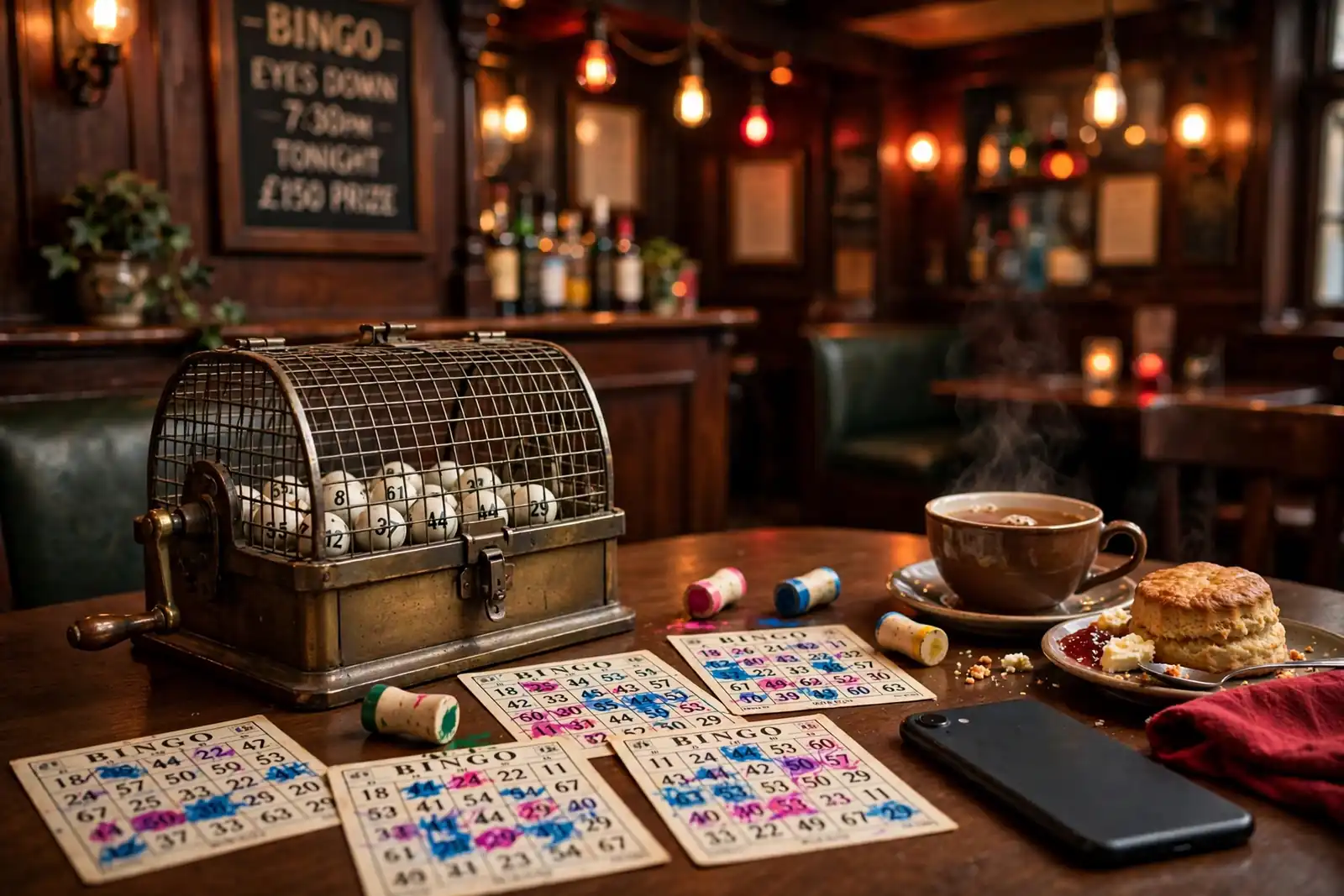
Bingo and online slots may sit within the same broad casino market, but they are different products. A bingo game is not a slot game simply because both are offered online or appear under a casino brand. The distinction matters when reading game rules: the stake and design requirements discussed here concern online slots, not bingo.
For slots, a game cycle is the relevant unit for the stake cap. The maximum stake is £5 per cycle for players aged 25 and over. For players aged 18 to 24, it is £2 per cycle. The lower cap took effect on 21 May 2025; the £5 cap for older adults took effect on 9 April 2025. These are limits on online slot stakes, not a general ceiling for every form of remote gambling.
Slot design is also subject to specific requirements. Autoplay is prohibited, and there must be at least 2.5 seconds between spins. The rules constrain how a slot can be played and how quickly successive spins can begin. They should not be carried over to bingo by assumption. A shared website or a shared casino label does not turn separate game types into one regulatory category.
Choosing a bingo casino involves more than the games on offer, so it helps to review the information available about each option. This list provides a concise starting point, including the stated payout speed.
Britsino
Britsino has a stated payout speed of 1–3 business days. This is the available detail to consider when assessing it.
Zombillion
Zombillion has a stated payout speed of 1–3 business days. This is the available detail to consider when assessing it.
SlotoSport
SlotoSport has a stated payout speed of 1–3 business days. This is the available detail to consider when assessing it.
Chanze
Chanze has a stated payout speed of 1–3 business days. This is the available detail to consider when assessing it.
Dieselwin
Dieselwin has a stated payout speed of 1–3 business days. This is the available detail to consider when assessing it.
NightLuck
NightLuck has a stated payout speed of 1–3 business days. This is the available detail to consider when assessing it.
WinBeast
WinBeast has a stated payout speed of 1–3 business days. This is the available detail to consider when assessing it.
x3bet
x3bet has a stated payout speed of 1–3 business days. This is the available detail to consider when assessing it.
Amunbet
Amunbet has a stated payout speed of 1–3 business days. This is the available detail to consider when assessing it.
EvoSpin
EvoSpin has a stated payout speed of 1–3 business days. This is the available detail to consider when assessing it.
That distinction is useful when comparing online bingo and slots in the UK. A description of a slot’s stake limit says nothing by itself about the rules of a bingo product. Equally, a bingo label does not exempt a slot from the requirements that apply to slot play. The applicable rule follows the game type, rather than the menu heading, promotional wording or site layout.
The same care is needed with the phrase “casino”. In Great Britain, the Gambling Commission is the sole regulator of commercial gambling. It oversees gambling activity, including remote casino products offered to consumers in Great Britain. Its regulatory reach does not depend on where the operator’s key equipment is located. A business and an individual also have different roles in the licensing system: businesses receive operating licences, while individuals involved in operating gambling businesses may require personal licences.
This framework explains why “online bingo and casino” can be an imprecise description. It may refer to separate products presented by one service, but it does not establish that the products share game rules. A slot’s spin interval remains a slot requirement. The slot stake cap remains a slot limit. Neither is a general rule for every activity that happens to be available online.
 Blueprint Gaming Casinos in the UK: What to CheckSee why Amatic’s business-to-business supplier status does not verify which Blueprint games a UK casino offers, and what operators control.
 Amatic Casinos in the UK: Games, Play and PayoutsLearn how Amatic slots use fixed paylines, how real-money and free-play access differs, and why the game’s layout alone does not determine…
 Amatic Slots in UK Online Casinos: A Practical GuideLearn how Amatic slots move from game supplier to casino lobby, including their fixed nine- or ten-payline formats and key points about…
The distinction also prevents a common category error in comparisons of bingo and slots. Slot-specific limits cannot be used to infer how a bingo game is structured, what its participation conditions are, or what controls apply to it. Those are separate questions. They are not a substitute for the rules governing bingo.
When assessing a site that presents bingo and slots together, the product names should therefore be read literally. “Slots” identifies the category to which the slot stake and design requirements apply. “Bingo” identifies a different form of gambling, not another name for a slot. The fact that both may be available through an online casino does not make the rules interchangeable.
This is particularly relevant to searches for online bingo slots or bingo and slots online. Such wording can describe interest in both products, but it does not make “bingo slots” a single game category for regulatory purposes. A slot game remains subject to the slot-specific requirements even if discovered through a bingo-labelled page. Conversely, the slot requirements should not be presented as bingo rules merely because the two products are discussed together.
The clean comparison is therefore one of scope. Online slots have defined limits on stakes and spin design in Great Britain: the applicable maximum depends on the player’s age, autoplay is not allowed, and a minimum interval separates spins. Bingo belongs to a separate category. The rules set out for slots should be applied to slots, not treated as a general rulebook for every online casino product.
A bingo casino and a casino with a broad slot catalogue describe different things. The first label points to bingo as a central part of the product; the second may refer to a casino where slots are prominent, whether or not bingo is offered. The distinction matters because the word “casino” alone does not identify which games are available, how they work or what terms apply.
Bingo and slots should not be treated as interchangeable categories. A slot title belongs to a particular game catalogue, while bingo is a separate product category. A page describing bingo casino games therefore needs to establish that bingo is actually offered, rather than relying on the presence of casino games or a slot lobby. Likewise, a slot selection cannot, by itself, confirm that a site provides bingo.
That separation also limits what can responsibly be said about bingo play. Supplying familiar-sounding details would turn assumptions about the category into claims about an individual product. Those are not the same thing. A useful comparison can identify the categories; it cannot fill in unconfirmed rules.
The same care applies to labels such as “bingo slots” or “free bingo and slot games”. They can be used loosely to describe a site that combines products, but the wording does not establish that a particular bingo game is free, that a slot is themed around bingo, or that both products are available under the same conditions. Those points depend on the actual offering and its terms. A label is not a rulebook.
 Slingo Casinos in the UK: What Can Be VerifiedLearn why Amatic’s role as a software supplier does not verify Slingo titles or establish which UK casinos offer them.
 Betsoft Online Casinos UK: Check the Supplier EvidenceThe article separates Betsoft from Amatic, explains why supplier listings do not prove casino availability, and outlines operator-set bonuses and UK rules.
For readers comparing casino bingo games in the UK, the practical distinction is between a site’s stated product range and the details of a particular game. A category page may signal that bingo is part of the service. It does not settle the mechanics, costs or eligibility of every game within that category. Those require game-specific information. The same standard applies to free-play descriptions: “free” is not enough to establish whether access is unrestricted, whether a balance has a cash value, or whether any conditions attach. No terms should be inferred from the label alone.
This is why bingo and slot descriptions need separate evidence. Slot rules and restrictions cannot be transferred to bingo by analogy, and bingo terminology cannot explain how a slot pays or runs. Even when both appear under one casino brand, each product retains its own game rules and any applicable conditions. Treating one as proof of the other produces a neat description at the cost of accuracy.
A sound description of bingo games in a casino setting can therefore be concise: bingo is a distinct product category, not another name for slots, and the presence of one does not establish the availability or mechanics of the other. Specific claims about bingo titles or formats need support from the relevant game or operator information. Until then, a general category label should remain exactly that—a label, not a promise about the contents behind it.
A bingo-and-slots site brings two kinds of play into one consumer-facing service. The shared account is an administrative arrangement; it does not make bingo and slots the same product. Each remains a distinct game category, and a description of one cannot be treated as evidence about the other.
That distinction matters when a site presents bingo and casino games side by side. The word “casino” may describe the wider range of games offered, while bingo identifies a separate part of the service. A combined menu therefore says something about the site’s product mix, but not about the rules, features or terms of every game within it.
Slot regulation provides a clear example of why those boundaries matter. In Great Britain, the maximum stake for an online slot is £5 per game cycle for players aged 25 and over. For players aged 18 to 24, the limit is £2 per cycle. The first cap took effect on 9 April 2025 and the lower-age-group cap on 21 May 2025. These are slot stake limits, not account-wide limits and not a statement of how bingo play is governed.
A site’s combined layout does not extend a slot rule to bingo. Nor does the presence of bingo establish that slot rules apply to bingo games. The relevant category is the game being played, not the section of the website in which it appears. Treating the entire account as one undifferentiated product obscures that distinction.
The same care applies to descriptions of “bingo and slots” as a single offer or package. As a product label, the phrase can mean that both categories are available through one service. It does not, by itself, establish that they share game mechanics or rules. A combined account should not be read as proof that every condition applies across both categories; the scope of a condition depends on what it actually covers.
 Amatic Slots in UK Casinos: How They WorkLearn how Amatic slot mechanics differ from casino reviews: games typically use five reels, three rows and nine or ten fixed paylines.
 Barcrest Casinos in the UK: What to VerifyLearn how to distinguish a Barcrest provider label from a named game and a casino’s actual lobby, and assess claims about offers…
For slots, the stake cap is measured per game cycle. It is not a general ceiling on the amount held in an account, nor does it define the rules of a bingo game. The age bands also matter: the applicable maximum for a slot depends on whether the player is aged 25 or over, or between 18 and 24. Those figures can help identify the boundaries of the slot product, but they do not describe a site’s bingo offering.
A practical way to read a combined service is to separate its claims. The presence of bingo indicates a bingo product; the presence of slots indicates a slot product. Evidence about the slot side, including its statutory stake limits, should not be used to fill gaps in what is known about the bingo side. Equally, a bingo label does not make the slot limits irrelevant when the game in question is an online slot.
This is the useful meaning of bingo and slots under one account: a shared service can bring separate categories together without merging their rules. The account may be common, but the game category remains the proper unit for understanding which restrictions apply.
The value of a free-spin offer depends on what happens to any winnings after a spin. With 0× wagering, the win is credited as cash without a further playthrough requirement. With a wagering requirement, the credited amount remains subject to conditions: it must be wagered before it can be withdrawn. The headline number of spins does not settle that difference.
Wins are credited as cash without a further playthrough requirement.
Credited amounts must be played through before they can be withdrawn.
The withdrawable sum depends on the stated requirement and the balance to which it applies.
A specialist review reports that 32Red, Betfred and Bet365 offer free-spin wins with 0× wagering. On those terms, a qualifying win is not multiplied by a wagering target before withdrawal. That is a materially different calculation from an offer where winnings, or a bonus balance containing them, must be played through. The exact offer conditions still matter: “0×” describes the wagering requirement, not every rule attached to the promotion.
For an offer with a playthrough condition, the amount that must be wagered depends on the stated requirement and the balance to which it applies. Without those terms, the eventual withdrawable sum cannot be calculated. A large spin allocation can therefore have less practical value than a smaller one with cashable wins. The relevant comparison is not simply the number of spins, but the route from a spin win to money available for withdrawal.
The same specialist review describes a Bet365 offer requiring a £10 minimum lifetime deposit and distributing up to 500 spins over 10 days. It reports 0× wagering on the wins. The deposit condition and the wagering calculation are separate parts of the offer: meeting the lifetime-deposit condition concerns eligibility, while 0× means the spin winnings do not acquire a playthrough target. The stated distribution period also means the full allocation is not necessarily delivered at once.
These terms should not be collapsed into a single “free” label. A spin may cost nothing to play while its win remains restricted by a wagering condition. Conversely, a 0× term removes that particular restriction but does not, by itself, establish that every win is eligible, that no other conditions apply, or that an offer is available to every account. The promotion’s own wording determines those points.
 UK Amatic Casinos: Availability, Licensing and TermsLearn how Amatic titles reach UKGC-licensed casino lobbies, what RTP versions and bonus terms mean, and why payouts remain the operator’s responsibility.
 Habanero Online Casinos in the UK: Rules and ChecksLearn how UK slot rules apply to Habanero games, what casino availability can verify, and why players aged 25 and over face…
For searches framed around bingo and slots, the same accounting distinction applies only where the offer terms actually identify the eligible game and the treatment of its winnings. A reference to free spins does not establish that spins apply to bingo games; nor does a bingo-casino label prove which slot titles qualify. Game eligibility and wagering treatment are separate clauses, and both need to be read before assigning a cash value to the offer.
A useful comparison records three items: the qualifying deposit condition, if any; how spins are allocated and when they must be used; and whether resulting wins carry a wagering requirement. In the reported Bet365 terms, the first item is a £10 lifetime deposit condition, the allocation is up to 500 spins over 10 days, and the reported wagering rate on wins is 0×. Where one of those clauses differs, the net value differs too. Counting spins alone is the least informative calculation.
“No deposit” describes the entry condition of an offer: a qualifying benefit is presented without a deposit being required to claim it. The phrase does not, by itself, say whether the benefit can be withdrawn, what games can be played with it, or whether winnings must be wagered before withdrawal. Those are separate terms, and the offer label settles none of them.
Bonus Condition Check
Check Deposit Condition
Determine if a deposit is needed to qualify for the offer (e.g., no-deposit vs. deposit-required).
Review Wagering Condition
Check the playthrough requirement, ensuring it does not exceed the UKGC 10× cap.
Verify Game Condition
Identify which specific products or games count towards the wagering requirement.
The distinction matters for searches combining bingo and slots. A no-deposit offer could refer to access to a game, a bonus balance or another promotion; the wording alone does not establish which. Nor does it confirm that an offer covers both bingo and slots. Product eligibility and withdrawal conditions have to be stated in the promotion’s terms, rather than inferred from its headline.
For UK players, a separate regulatory limit applies to wagering requirements on bonus funds. The UK Gambling Commission’s 10× cap took effect on 19 December 2025. It sets a ceiling on the wagering requirement; it does not require an operator to offer a no-deposit promotion, make every bonus no-deposit, or remove other conditions from an offer.
That separation can be represented simply:
The first question is answered by the offer’s eligibility wording. The 10× limit concerns the second. A promotion can be deposit-free and still carry a wagering requirement, subject to the regulatory cap. Conversely, the cap does not turn a deposit-required offer into a no-deposit one. Treating the two conditions as interchangeable makes the headline look more informative than it is.
The same care applies to phrases such as “free bingo and slots” or “no-deposit slots and bingo”. They may suggest access to both products, but they do not establish that both contribute equally to wagering, or that either is included at all. If game eligibility is restricted, the calculation can differ from what a broad promotional label implies. The written terms, not the wording used to attract attention, determine the conditions.
A useful comparison therefore records the deposit requirement and wagering requirement in separate fields. If no deposit is required, that should be stated independently of any playthrough condition. If bonus funds carry wagering, the stated requirement must remain within the 10× ceiling applicable in Great Britain. The cap is a maximum, not a standard target: an operator may set a lower requirement, while a promotion may also have other eligibility or withdrawal conditions.
For bingo-focused offers, a no-deposit label alone is not enough to establish the value of the promotion. It gives no final cash amount and says nothing about whether winnings can be withdrawn without further conditions. The commercial value is determined by the full set of terms: qualification, eligible games, wagering and withdrawal. A prominent “free” label is packaging; the conditions determine the payable result.
A site that offers both bingo and slots may present the products under one account or in a shared lobby. That broad description confirms a product category, not the exact contents of its slot catalogue. A general claim that a bingo site also has slots does not establish that a particular game provider, or any specific title from that provider, is available there.
Amatic illustrates the distinction. It supplies games to UKGC-licensed operators through direct integrations or aggregator feeds; it does not sell a standalone product to players. Its games therefore appear, where available, within an operator’s own offering. A site’s status as a bingo-and-slots destination is not evidence that its lobby includes Amatic games.
The relevant check is the operator’s current provider information. A specialist review advises checking the casino’s provider list for Amatic titles before depositing, because availability was not individually confirmed. That is a practical distinction: a provider’s route into the market shows that distribution is possible, while the operator’s current catalogue is what can indicate whether its games are offered there. A general “slots available” label cannot substitute for that check.
The same reasoning applies to claims about bingo casino sites. A site may combine bingo and slots, but that label alone does not verify the software behind its slot games. Nor does it establish that a particular provider is present across every site in a category. Provider availability belongs to the individual operator’s catalogue, and catalogues can differ.
For a comparison of bingo sites with slots, the useful evidence is therefore specific rather than promotional: whether the site identifies its slot providers and whether the provider in question appears in the operator’s current list. If the available description only says that slots are offered, the conclusion should remain limited to that claim. It should not be expanded into an assumption about particular games.
 Online Casino Game Shows in the UK: What the Label MeansLearn what “live game shows” means in online casinos, and why the category label alone cannot establish a title’s format, operation or…
 Amatic Slots at UK Casinos: Paylines, RTP and PlayLearn how Amatic slots reach UK casinos and what to check before playing, from fixed paylines to casino-specific RTP. The typical layout…
This matters when assessing a site described as new or as offering both bingo and casino games. The combination says something about the range of products presented, but not necessarily about the depth or composition of the slot catalogue. Likewise, a broad catalogue description cannot confirm individual provider availability. The distinction is modest but financially relevant: a category label describes the site; a current provider listing is the more direct evidence about its games.
A bingo casino and a casino with slot games are not interchangeable claims. A site may describe itself as a bingo destination, while a separate claim might concern the slots available there. Neither label, by itself, establishes the other. A ranking that treats them as one category can therefore imply a product combination that has not been demonstrated.
The distinction matters when assessing lists of the best bingo casinos in the UK. A credible comparison needs evidence for the feature being ranked: that the service offers bingo, that it offers slots if both products are claimed, and that the listed terms apply to the relevant product. A casino name appearing beside a slot title would not, on its own, establish that the casino offers bingo. Nor does the word “bingo” in a page heading verify the contents of a game catalogue.
The regulator provides a separate kind of evidence. The UK Gambling Commission oversees gambling in the United Kingdom, including online casinos. That regulatory role does not amount to an endorsement of a particular site, a ranking, or confirmation that a casino offers bingo or any specific slot. Those are product claims and need to be supported separately from the fact that gambling is regulated.
This wording can be read in two ways: slots offered by a bingo-branded service, or a search for bingo games presented in slot form. The terminology alone cannot confirm which title or format is actually available.
This gives “bingo slots” two possible readings: slots offered by a bingo-branded service, or a search for bingo games presented in slot form. The wording alone cannot settle which meaning is intended, and it cannot confirm that a particular title or format is available. A useful comparison should state plainly what is being assessed rather than letting the label do the work.
The same standard applies to claims about the best bingo casino or the best bingo slots. “Best” requires a stated basis for comparison; without one, it is a verdict without a calculation behind it. A list that names casinos but does not establish their bingo offering, or lists slots without confirming where they are available, leaves the central claim unresolved.
For a combined claim, the evidence must cover both sides: the service’s bingo proposition and its slot offering. Where only one is established, the conclusion should remain limited to that product. This avoids turning a general casino label into proof of a bingo service, or turning the presence of slots into proof of a bingo catalogue.
A minimum lifetime deposit and a wagering requirement are separate conditions. The first is a threshold tied to the account’s deposit history; the second determines whether bonus funds or winnings must be played through before withdrawal. Meeting a deposit condition does not, by itself, create a wagering obligation or remove one.
 Amatic Slots in UK Casinos: Rules and PlayLearn how Amatic slot features and fixed paylines work, what the published RTP figure means, and how UK casino terms apply to…
 Relax Gaming Casinos in the UK: What Can Be VerifiedNo Relax Gaming title is confirmed here as a UK casino listing. Learn why game availability must be checked in each operator’s…
A specialist review reported a bet365 free-spin offer with a £10 minimum lifetime deposit, distributing up to 500 spins over 10 days. The deposit figure describes an eligibility condition measured across the account’s lifetime, not necessarily a payment required at the point the offer is claimed. The review also reported that the resulting free-spin wins carried 0× wagering. Under that term, a payout is credited as cash without a further playthrough requirement. The deposit condition and the treatment of winnings therefore do different jobs in the offer calculation.
The same specialist review reported 0× wagering on free-spin wins at 32Red and Betfred. That means the reported payouts were cashable without being recycled through a wagering target. It does not establish that every promotion at those casinos has the same terms, or that a bingo-specific offer is available. Offer conditions attach to a particular promotion, not to the broad label “bingo and slots”.
The financial difference is direct. With 0× wagering, the spin win does not acquire an additional turnover condition before it can be withdrawn, subject to the promotion’s other stated terms. With a wagering requirement, the balance remains conditional until the required playthrough is completed. A minimum deposit can still apply in either case; it governs qualification, not the conversion of a win into withdrawable cash.
The UK Gambling Commission’s ceiling on wagering requirements for bonus funds took effect on 19 December 2025, setting a maximum of 10×. That cap limits the playthrough burden where a requirement applies; it does not turn a deposit threshold into a wagering term, nor does it mean every offer carries the maximum. The terms need to be read as separate entries: what must be deposited, what is awarded, and what must be played through before withdrawal.
A game supplier and a casino are different businesses, even when a supplier’s name appears beside a game in a casino lobby. Amatic Industries GmbH is an Austrian business-to-business software supplier, founded in 1993. It does not run consumer-facing casinos. Its role is to provide games to operators, not to open player accounts or manage a casino offer.
That distinction matters when comparing bingo and slot sites. A supplier’s name can identify who made a slot, but it does not identify the company taking a deposit or setting the terms attached to a promotion. Amatic does not take bets from British players directly. The casino operator is responsible for deposits, payouts, bonus terms and customer support.
The operator’s identity is therefore the relevant detail when a dispute concerns money or an offer. A software provider cannot settle a payout issue on behalf of a casino simply because its game was involved. Equally, the presence of a supplier’s title does not establish who operates the site or what conditions apply to an account.
For a UK-facing casino, the operator must hold the relevant UKGC licence to offer remote gambling to customers in Great Britain. That responsibility sits with the consumer-facing business, not with a software supplier. A game provider’s credentials and an operator’s permissions are separate matters; treating them as interchangeable would assign the player-facing obligations to the wrong company.
This is useful when assessing claims about the best bingo and slot sites in the UK. A site’s branding, game-provider references or promotional wording should not obscure the company named in its account terms. That is the business responsible for handling funds and applying the offer conditions. The provider may explain the origin of a slot; it does not establish that a casino’s bingo product, bonus or payout arrangements are operated by the same business.
For any combined bingo-and-slots offer, the practical check is the operator named in the terms, not merely the supplier credited for a game. The supplier builds or distributes software. The casino controls the customer relationship and the financial conditions. Those are separate jobs, and the distinction is more useful than a long list of site names.
Mobile access can mean either opening a game in a phone or tablet browser or using a dedicated app. Those routes are not interchangeable: browser-based access does not, by itself, establish that an operator has a bingo app, or that a particular app includes bingo.
Amatic games are generally played through a mobile browser as HTML5 games, without a download. That describes access to Amatic titles; it does not confirm that a bingo casino app is available or that bingo games run through the same route. A casino may present slots and bingo as mobile products, but the presence of one does not establish the availability of the other.
The practical distinction is between the software format and the game category. HTML5 identifies how the Amatic games run in a browser, not whether a site’s mobile product is a bingo app. Likewise, an app listing or a mobile-friendly casino page cannot alone confirm which games it contains. The game catalogue and the access method are separate details.
For a site described as offering bingo slots on mobile, the relevant checks are therefore specific: whether the title is a slot or a bingo game, and whether it opens in a browser or through an app. A label such as “mobile” is not enough to settle either point.
Yes. Amatic Industries GmbH holds a UK Gambling Software (Remote) licence, and its games are distributed to UK players through UKGC-licensed operators. The operator, rather than Amatic, handles bets and payouts.
Yes. Amatic games generally run in a mobile browser as HTML5 games, without requiring a download.
Amatic Industries GmbH is an Austrian business-to-business software supplier founded in 1993. It supplies games to casino operators rather than running consumer-facing casinos.
UK operators carrying Amatic games, including 32Red, Betfred and bet365, offer free-spin wins with no wagering requirement on the winnings. At bet365, the offer requires a £10 minimum lifetime deposit and can provide up to 500 spins over 10 days; check the operator's terms for eligibility.