Learn how mobile payments fit into a casino account, what to check before depositing, and why withdrawals need a different route.
A casino’s slot catalogue and its deposit methods answer different questions. Slots describe the games available in the account; pay by mobile describes how a deposit is funded. Choosing Payforit does not select a particular game, add new titles to the catalogue or establish that a casino offers a certain type of slot.
That distinction matters when looking for new mobile casino games that can be funded by SMS. A game may be available at a casino without Payforit being available there, and a cashier may offer Payforit without the casino having any particular new release. The game catalogue and the payment options need to be assessed separately. Neither is evidence of the other.
The same applies to searches for pay-by-mobile casino sites. The phrase identifies an intended payment route, not a standard games collection shared by every operator. Each casino controls its own catalogue and cashier. A title described as new at one site may not appear at another, while a site that accepts Payforit may not have the game being sought. The payment method does not make the catalogue more current or more extensive.
When considering pay-by-mobile casinos in the UK, check the available details carefully and avoid assuming that every listed option offers the same features. The stated payout timeframe is one useful point to keep in view.
Britsino
Britsino has a stated payout speed of 1–3 business days. No further operator-specific details are provided here.
Zombillion
Zombillion has a stated payout speed of 1–3 business days. No further operator-specific details are provided here.
SlotoSport
SlotoSport has a stated payout speed of 1–3 business days. No further operator-specific details are provided here.
Chanze
Chanze has a stated payout speed of 1–3 business days. No further operator-specific details are provided here.
Dieselwin
Dieselwin has a stated payout speed of 1–3 business days. No further operator-specific details are provided here.
NightLuck
NightLuck has a stated payout speed of 1–3 business days. No further operator-specific details are provided here.
WinBeast
WinBeast has a stated payout speed of 1–3 business days. No further operator-specific details are provided here.
x3bet
x3bet has a stated payout speed of 1–3 business days. No further operator-specific details are provided here.
Amunbet
Amunbet has a stated payout speed of 1–3 business days. No further operator-specific details are provided here.
EvoSpin
EvoSpin has a stated payout speed of 1–3 business days. No further operator-specific details are provided here.
“New” is about the game’s release or its recent addition to a casino’s catalogue. “Pay by mobile” is about the funding method. Joining those terms does not create a separate class of slot: it describes two features that need to be confirmed independently.
A useful comparison therefore starts with the game itself. The casino’s catalogue needs to show whether the title is available to its account holders. The cashier then needs to show whether Payforit is currently offered for that account. A mention of mobile deposits on a general information page does not establish that a particular slot is available; a game listing does not establish that Payforit can fund play.
The distinction also prevents a common mismatch between a game-led expectation and a payment-led result. Someone seeking a particular slot may find a casino that accepts Payforit but does not list that title. Someone seeking a payment route may find the method at a casino whose catalogue is not the reason for choosing it. These are separate conditions, not a package.
Payment choice can affect the value of an offer even though it does not affect which games are listed. A specialist review of UK casino terms reports that most casinos exclude Payforit deposits from welcome bonuses and promotional offers. That is a material condition: a deposit made by phone may not qualify for an offer that appears elsewhere on the same casino’s site.
 Casinos That Accept Siru Mobile in the UKA review names Mr Vegas and Videoslots for Siru Mobile; learn why that does not establish availability elsewhere or make it interchangeable…
 Casinos that accept bank cheques in the UKLearn why Boku availability does not prove a casino accepts bank cheques, and how Pay by Phone differs from cheque deposits.
The wording of the offer matters more than its headline. A welcome promotion can be displayed prominently while its terms restrict eligible deposit methods. If Payforit is excluded, the amount deposited through that route does not become bonus-eligible simply because the account is new or the promotion is visible. The payment method and the promotion’s qualifying conditions must both fit.
Promotional eligibility can also be separate from access to games. An excluded deposit does not, by itself, say that the slot catalogue is unavailable; it says that the deposit does not meet the stated offer conditions. Likewise, a game’s presence in the catalogue does not make a Payforit deposit eligible for a bonus. Treating those as one decision obscures the actual cost: the method may fund the account, while the promotional value attached to another deposit route is not included.
The practical comparison is therefore between the intended game, the method accepted by the cashier and the terms attached to any offer. If the priority is a specific new slot, catalogue availability is decisive. If the priority is paying by mobile, current Payforit support is decisive. If an introductory offer is part of the calculation, its payment exclusions are decisive. No one of these conditions confirms the other.
This is why a “best” pay-by-mobile casino cannot be identified from the payment label alone. A ranking based only on Payforit availability would say nothing about the games that matter to a player, while a list of new slots would say nothing about the cashier or bonus eligibility. The meaningful comparison is conditional: the desired game must be listed, the chosen payment route must be offered, and the promotion’s terms must allow that route if bonus value is being counted.
For mobile casino play by SMS, the same separation applies. SMS describes part of a payment process, not a type of slot or a promise of access to newly released games. A casino’s payment information cannot substitute for its catalogue, and its catalogue cannot substitute for the terms of its offers. The distinction is plain, if less exciting than a new title: the game, the deposit route and the promotional qualification are three separate entries in the calculation.
Pay-by-mobile is a way to fund a casino account, not a substitute for having one. A new account still sits within the operator’s ordinary age and account controls; choosing phone billing does not remove those conditions or create a separate route around them. The payment method affects how a deposit is charged, while the account remains the place where identity, play and financial settings are managed.
For a casino serving customers in Great Britain, the operator must hold a UK Gambling Commission (UKGC) licence. Online gambling is for people aged 18 and over, and operators must verify a customer’s age before allowing a deposit. A mobile number or an SMS confirmation should not be treated as proof that these checks have been completed. The payment step and the age check serve different purposes.
The sequence before funding therefore has an account stage. Registration establishes the customer’s casino account; age verification must be completed before funds can be deposited. The precise screens and timing of account checks depend on the operator, so a phone-based payment option does not establish that an account is ready to deposit. If a required check remains outstanding, the payment method itself does not resolve it.
 Casinos That Accept WebMoney in the UKWebMoney and Boku are different payment methods. Learn what a Boku cashier listing confirms, and why it does not establish WebMoney availability.
 Anonymous Crypto Casinos in the UK: How They WorkLearn how crypto deposits, checks and bonus terms work, and why the UK Gambling Commission does not license casinos that accept cryptocurrency.
There is also a required financial prompt before the first deposit. New remote customers must be prompted to consider setting a financial limit before making that deposit. This is an account-level decision, not a special setting attached only to Payforit, Boku or another phone payment. The distinction matters: the funding route determines how money enters the account, but the limit concerns the account’s financial controls.
That prompt should appear before the first deposit, rather than being treated as a task to revisit after a payment has already been made. Account-level limit facilities must also remain accessible afterwards. The first prompt is therefore not the whole control; the account must continue to provide access to its limit settings. A mobile casino account is not complete, from a funding perspective, merely because a phone payment can be selected.
These controls sit alongside the account itself, regardless of whether it is accessed on a phone, tablet or computer. “Mobile casino” describes the device or setting in which the account is used; it does not change the operator’s age-verification responsibility or the requirement to present the financial-limit prompt before a first deposit. Nor does paying by SMS make the account independent of those obligations.
This is relevant when comparing a new pay-by-mobile casino account with an existing one. An existing customer may already have completed account checks and considered a limit, while a new remote customer must encounter the required prompt before the first deposit. The payment route does not determine that distinction. It is the account’s status and the customer’s position in the deposit process that matter.
A sensible way to read the account flow is to separate three questions: whether an account has been created, whether the operator has verified age before allowing a deposit, and whether the required financial-limit prompt has appeared before the first deposit. These are not interchangeable steps. A successful sign-up does not itself demonstrate that age verification is complete; selecting pay by mobile does not replace the financial prompt.
For a pay-by-mobile casino account, then, the phone is a funding channel, not an alternative account framework. The operator’s age and account controls apply first, and the financial-limit prompt belongs before the first deposit. Afterward, access to account-level limit facilities must remain available. That is the basic structure whether a customer describes the method as pay by phone, pay-by-mobile or mobile casino payment by SMS.
A casino’s payment policy page can describe methods the operator has supported, but it does not establish what is available now. The current cashier is the practical check: it shows whether pay by mobile is offered for the account at the time of deposit. A page naming Payforit, or a specialist review describing it, is a lead to verify rather than confirmation that the method remains selectable.
The distinction matters because a casino may accept several payment types without accepting mobile payments. A logo in a footer or a general list of payment options may not show which methods are currently enabled. The cashier should identify the available deposit methods directly. If Payforit is absent there, a general reference elsewhere on the site is not enough to treat it as an available route.
The displayed terms are part of the acceptance check, not fine print to inspect after choosing a method. Before funding the account, the cashier should be reviewed for the minimum deposit, maximum transaction value and any fee. Those figures can differ between operators and methods, so a number found on a third-party page cannot substitute for the live terms. If the cashier does not show a value or charge clearly, the cost remains unconfirmed.
Account controls should be checked at the same stage. The relevant question is not only whether the method appears, but whether the account provides access to its financial-limit controls before a deposit is made. The current cashier and account settings are the places to confirm the limits that apply to that account. A payment option being listed does not by itself establish that every account control has been reviewed.
The check should therefore distinguish three points: method availability, transaction terms and account controls. A method shown in the cashier answers the first point. Its displayed minimum, maximum and fee address the second. The account’s financial-limit facilities address the third. Treating these as separate checks avoids reading a payment logo as evidence that the whole transaction is suitable.
Searches for casino sites that accept pay by mobile in the UK can return old reviews, broad payment summaries and operator pages written at different times. Those sources may help identify a casino to examine, but they cannot confirm the current cashier contents. Payment listings can change; the decisive information is the set of options and terms presented by the selected operator now.
A clear cashier listing is also more useful than an unqualified claim that a casino accepts mobile deposits. The claim may refer to a method offered at some point, while the live account view determines whether it can be selected for the intended deposit. If the cashier’s information is incomplete or inconsistent with another page, availability and cost should be treated as unresolved until the operator’s current terms clarify them.
This approach keeps the decision tied to the actual account rather than a general promise. A casino can be considered to accept pay by mobile only when the method appears in its current cashier, and the accompanying transaction values, charges and account controls have been checked there. That is a narrower test than relying on a list of casinos, but it is the one that establishes what is available before money is committed.
The UK credit-card restriction applies to remote gambling, including online casino deposits. A UK Gambling Commission licensee cannot accept a credit-card payment for gambling. The rule also covers a payment routed through a money service business: inserting an intermediary does not make credit-card funds acceptable for a casino deposit.
That boundary matters when an online casino offers several payment labels. The method displayed at checkout does not, by itself, establish what funding source may be used. A payment routed through another service remains prohibited if the underlying funds come from a credit card. The route is not a loophole; it is still a credit-card payment for gambling.
Pay by mobile is a separate payment route from paying directly by credit card, but the label alone is not a complete test of a transaction. A casino’s cashier must identify the method actually being used, and the credit-card restriction remains relevant whenever card funds are involved. Describing a deposit as an online casino pay-by-mobile transaction does not change its character if the payment is in fact routed from a credit card through a money service business.
The practical distinction is between the payment name and the source of funds. A branded option, an intermediary or a sequence of transfers cannot override the restriction. Where the source is a credit card, the payment cannot be accepted for remote gambling by a UK-licensed operator, even if the casino’s payment screen presents another service along the way.
This is also why pay by mobile and credit-card payments should not be treated as interchangeable terms. Pay-by-mobile describes a way of charging a payment to a mobile account; the ban concerns credit-card funding for gambling. The payment method’s name is not evidence that a particular transaction complies. The cashier’s stated route and the source of the funds both matter.
The rule concerns remote gambling payments, not merely a card number entered directly into a casino cashier. Its inclusion of payments routed through a money service business closes off the assumption that an additional provider changes the outcome. The relevant question is not how many steps appear between the card and the casino, but whether the casino payment is funded by a credit card.
For a casino offering pay by mobile, the credit-card rule sets a boundary rather than confirming that the method is available or suitable for every account. Availability is a separate cashier question. The restriction itself is clear: remote gambling licensees must not accept credit-card payments for gambling, including payments channelled through a money service business. A different payment label cannot turn a prohibited card-funded deposit into an acceptable one.
A casino described as “not registered with GamStop” is not thereby shown to be licensed, safe to use or able to accept pay by mobile. GamStop status and a UKGC licence are separate matters. For real-money gambling offered to customers in Great Britain, the operator must hold the relevant UKGC licence, wherever the company is based. A label about GamStop does not replace that requirement.
The distinction matters when a casino is presented as a pay-by-mobile option. Payment availability is an operational detail of the individual account and cashier; it does not follow from a statement about GamStop. Nor does a payment logo or a claim on a promotional page establish that Payforit is available to every customer. The current cashier is the relevant place to confirm the method for the account in question.
A casino serving Great Britain without the required UKGC licence sits outside the UK regulatory system. Its availability on the internet does not turn it into a UK-licensed operator. In practical terms, a phrase such as “not registered with GamStop” cannot be used as a substitute for checking the operator’s regulatory position. The two descriptions answer different questions: one concerns GamStop status, the other whether the operator has permission to serve the market.
This also limits what can be inferred from the phrase “pay-by-mobile casino”. It describes a possible way to fund an account, not the operator’s legal status, the terms attached to a payment, or whether the method is currently enabled. A listing that combines mobile payment and GamStop wording still needs to be assessed on those separate points. If the operator’s licence cannot be established, the payment claim does not resolve that problem.
The same distinction applies to claims about no-wagering offers. An offer’s wording does not establish that Payforit is accepted, and a payment option does not establish that an offer applies to deposits made through it. Those are separate terms. The cashier and the operator’s current terms determine what payment routes and offer conditions apply; broad labels cannot settle either question.
For British players, the legal boundary is clear: online gambling is lawful at sites holding the required UKGC licence. A casino’s location abroad does not remove the licensing requirement when it sells real-money gambling into Great Britain. Conversely, a statement that an operator is outside GamStop does not itself prove that it lacks a UKGC licence. Each claim needs to be treated on its own, rather than used as evidence for the other.
Accordingly, “not registered with GamStop” should be read only as a description of GamStop status, not as a quality mark or a payment guarantee. A UKGC licence addresses whether the operator is authorised for the British market; the live cashier shows whether pay by mobile is offered to that account. Neither answer can be inferred from the other.
The amount shown beside a pay-by-mobile option is only one part of the deposit cost. A casino’s live cashier is the place to confirm the minimum accepted deposit, the maximum transaction value and any fee attached to the selected method. Those terms can differ between payment options and may change, so an old page or specialist review is a snapshot, not a substitute for the current figures presented by the operator.
The distinction between a deposit minimum and a transaction ceiling matters when deciding whether a payment will fit the account. A request below the stated minimum may not be accepted; one above the method’s maximum may need to be reduced. Neither figure should be inferred from another casino’s terms, or from a previous visit to the same site. The relevant amount is the one displayed for that method in the current cashier.
Fees also affect the amount leaving the phone account or other funding source. The cashier should make clear whether a charge applies and what the total debit will be before the transaction is submitted. If the amount charged is greater than the casino credit received, the difference is a cost of using that route, not extra playable balance. Where the fee or total is unclear, the payment terms need to be checked before proceeding; guessing turns a small deposit into an unpriced transaction.
A pay-by-mobile deposit should therefore be assessed as a complete cost: the casino credit, any payment charge and the transaction value allowed by the method. A displayed deposit amount alone does not establish the final cost. The same check applies when a casino offers several ways to fund an account: limits and charges belong to the selected route, not to the casino in the abstract.
Financial controls are a separate part of the decision. Before a new remote customer makes a first deposit, the operator has to invite them to think about setting a financial limit. That prompt is not merely a screen to clear on the way to the cashier; it concerns the amount available for gambling. After the account is open, facilities for setting or changing financial limits must remain accessible. A limit that disappears once registration is complete would not meet that ongoing requirement.
The deposit controls and the financial limit serve different purposes. The cashier’s minimum and maximum determine whether a particular payment can be processed. An account-level limit governs the customer’s broader spending controls. A payment may fall within the method’s permitted transaction range yet still be inconsistent with the limit set for the account. Checking both avoids treating the payment provider’s ceiling as a spending plan.
Before funding a casino account by mobile, the useful record is the live cashier’s stated minimum, maximum and fee, together with the account’s available financial-limit controls. If any of those details are absent or unclear, the cost and control position is not yet established. The phone being able to carry the charge does not settle what the casino will accept or what limits apply.
Paying into a mobile casino through Payforit does not create a matching way to take money out. The deposit is charged either to a monthly phone bill or to a Pay as You Go balance. Casino funds cannot be withdrawn through Payforit, so the phone account used to fund play is not a payout destination.
That distinction matters when comparing casinos that accept payment by mobile bill. The cashier may offer Payforit for deposits while requiring withdrawals to use a separate method. A deposit option alone therefore says nothing about whether an account has a usable route for receiving casino funds.
Before making a deposit, the payout route available to the account should be established alongside any identity checks still outstanding and the operator’s current terms. A specialist casino-payment review likewise advises checking those points before funding an account. The relevant details are account-specific: the cashier and account terms determine which withdrawal methods are available and what conditions apply.
A payout route also needs to belong to the account holder and match the account information required by the operator. If identity checks remain incomplete, the withdrawal process may require those checks to be resolved. These are separate conditions from the Payforit transaction itself; successfully paying by phone does not settle them.
The practical calculation is straightforward. Payforit can move money from a phone bill or prepaid balance into a casino account, but it cannot return casino funds to that bill or balance. The route out must be checked separately, before money is deposited, rather than inferred from the route in.
This is particularly relevant to searches for mobile casino games paid for by phone bill: the payment method covers the deposit, not the entire movement of money through the account. Where no acceptable payout method is available, a working deposit route does not solve the account’s withdrawal needs. The terms and cashier should therefore be reviewed together, including any remaining verification requirements, before the first Payforit payment is made.
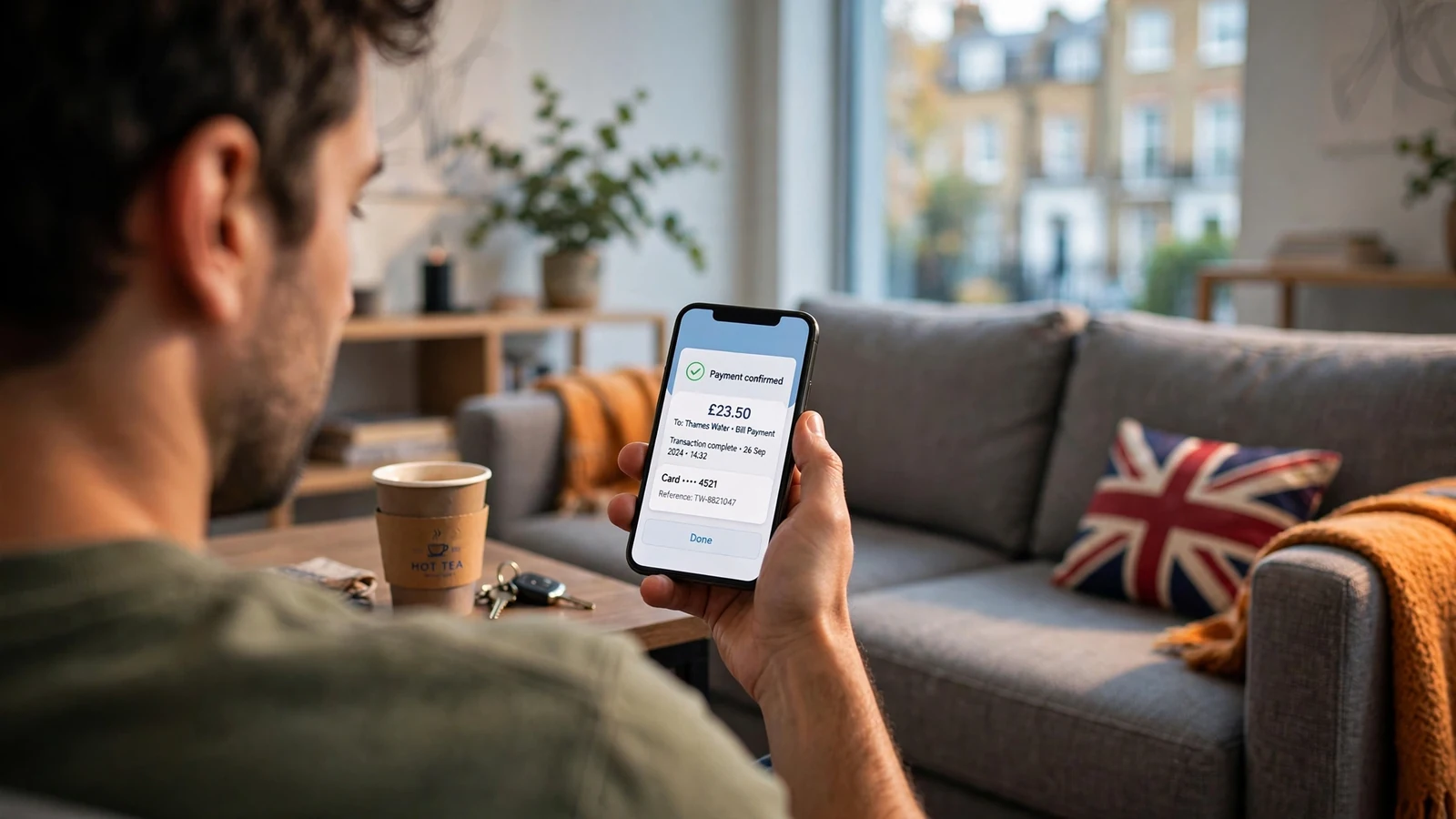
A Payforit deposit follows a short sequence: select Payforit in the casino cashier, enter a mobile number, receive an SMS confirmation code and submit that code. The code submission confirms the transaction; choosing the payment option or entering a number alone does not complete the described process.
The order matters. Payforit must first be selected as the deposit method so the cashier can begin the phone-payment flow. The mobile number is then entered, and the SMS confirmation code is received and submitted. Once the code has been submitted, the Payforit deposit is completed and the funds are credited to the casino account. Payforit deposits are instant, but that does not remove the confirmation step.
This is the practical distinction between mobile slots paid by SMS and simply playing on a phone. The device used to play does not itself determine the payment route. Payforit is the payment method; the SMS code is the step that confirms the deposit.
The sequence also helps identify where an incomplete transaction has stopped. If Payforit has been selected but no number has been entered, the process has not reached the SMS stage. If a number has been entered but the code has not been submitted, the confirmation is still outstanding. A deposit should not be treated as complete before the code is submitted.
For casino sites offering Payforit, the cashier is where this sequence begins. The same steps apply whether the funds are intended for slot games or another casino game: select the method, enter the mobile number, then submit the code received by SMS. There is no separate SMS payment process for slots.
Payforit Deposit Sequence
Selection
Select Payforit as the deposit method within the casino cashier.
Identification
Enter the mobile phone number associated with the account.
Confirmation
Receive the SMS confirmation code and submit it to complete the transaction.
The method therefore involves an explicit confirmation rather than an automatic charge triggered by opening a game or selecting a stake. The mobile number connects the deposit to the phone-payment process, while the SMS code provides the confirmation required to complete it. After submission, the deposit is instant. The transaction sequence is specific; it does not establish which other payment methods or account features are available at a particular casino.
Boku is a separate pay-by-mobile option from Payforit, and its availability depends on the casino’s current cashier. A casino appearing in a general payment-method list is not enough to establish that Boku can be used on a particular account. The cashier is the relevant check before a deposit is started.
Specialist reviews describe Boku’s standard maximum as £30 per transaction. That is a cap on one transaction, not evidence that every casino accepts deposits at that amount or offers a £5 minimum. The casino’s own cashier sets out the permitted values for its Boku option; a requested amount outside those terms cannot be assumed to go through.
The transaction also requires an SMS confirmation. The deposit does not proceed merely because Boku has been selected: the confirmation step must be completed before funds move. That makes the phone linked to the payment part of the transaction, rather than just a way to browse the casino.
A network processing fee may apply. Specialist reviews note that any such charge can differ according to the mobile network and tariff, so the total cost cannot be calculated from the casino’s deposit amount alone. Available phone credit must cover the deposit and any applicable charge; otherwise the payment may not complete. The fee, if shown, should be included in the amount assessed before confirmation.
References to Vodafone or another network do not prove that a particular casino supports Boku for that customer. Availability and transaction terms are determined by the live cashier, and can vary between operators or accounts. If Boku is not listed there, the payment method should not be treated as available. The practical comparison is therefore not simply between Boku and a £5 pay-by-mobile deposit: it is between the amount accepted by the selected cashier, any network charge, and the confirmation required to authorise the transaction.
Virgin Games is one operator whose cashier has listed Payforit as a deposit option. That makes it a relevant example for anyone comparing casino sites that accept pay by mobile, but it is not a standing promise that the method will appear for every account. Payment menus can change, and the live cashier is the point at which availability is established.
The listing has also been reported in a specialist review, alongside references to other operators. Such coverage is useful as an indication of where Payforit has appeared, not as a substitute for checking Virgin Games’ current deposit page. An operator may update its methods, or the options shown may depend on account circumstances. A past listing therefore cannot settle whether a deposit by mobile is available at the time of use.
This distinction matters when comparing a casino with pay by mobile against one that accepts other payment routes. The operator name alone does not confirm the payment method, and a general description of a casino as supporting Payforit does not establish the terms shown to a particular account. The current cashier is the relevant record for the method displayed.
A £5 deposit by mobile should not be assumed available merely because Payforit has previously appeared at Virgin Games. The amount has to fall within the limits presented in the live cashier, and the payment option itself must be offered there. If it is absent, a historical listing does not make it selectable.
Virgin Games is therefore a specific example, not a recommendation or a guarantee. The same standard applies to any casino site with pay by mobile: confirm Payforit in the current cashier before treating it as an available way to fund an account.
Yes. Payforit deposits are capped at £30 per transaction, and typical minimum deposits are £3–5.
Payforit is listed at the cashiers of Kwiff, NetBet, JackpotJoy and Virgin Games. Check the live cashier to confirm it is available for your account.
Payforit cannot be used to withdraw casino funds, so you’ll need another payout method. Withdrawal limits depend on the method and the casino’s current cashier; check these before depositing.
Boku deposits are capped at £30 per transaction.
Your mobile network may charge a processing fee, which varies by network and tariff. Your phone credit must cover the deposit and any applicable fee.