A practical guide to how live-dealer streaming, betting interfaces and game-specific rules differ.
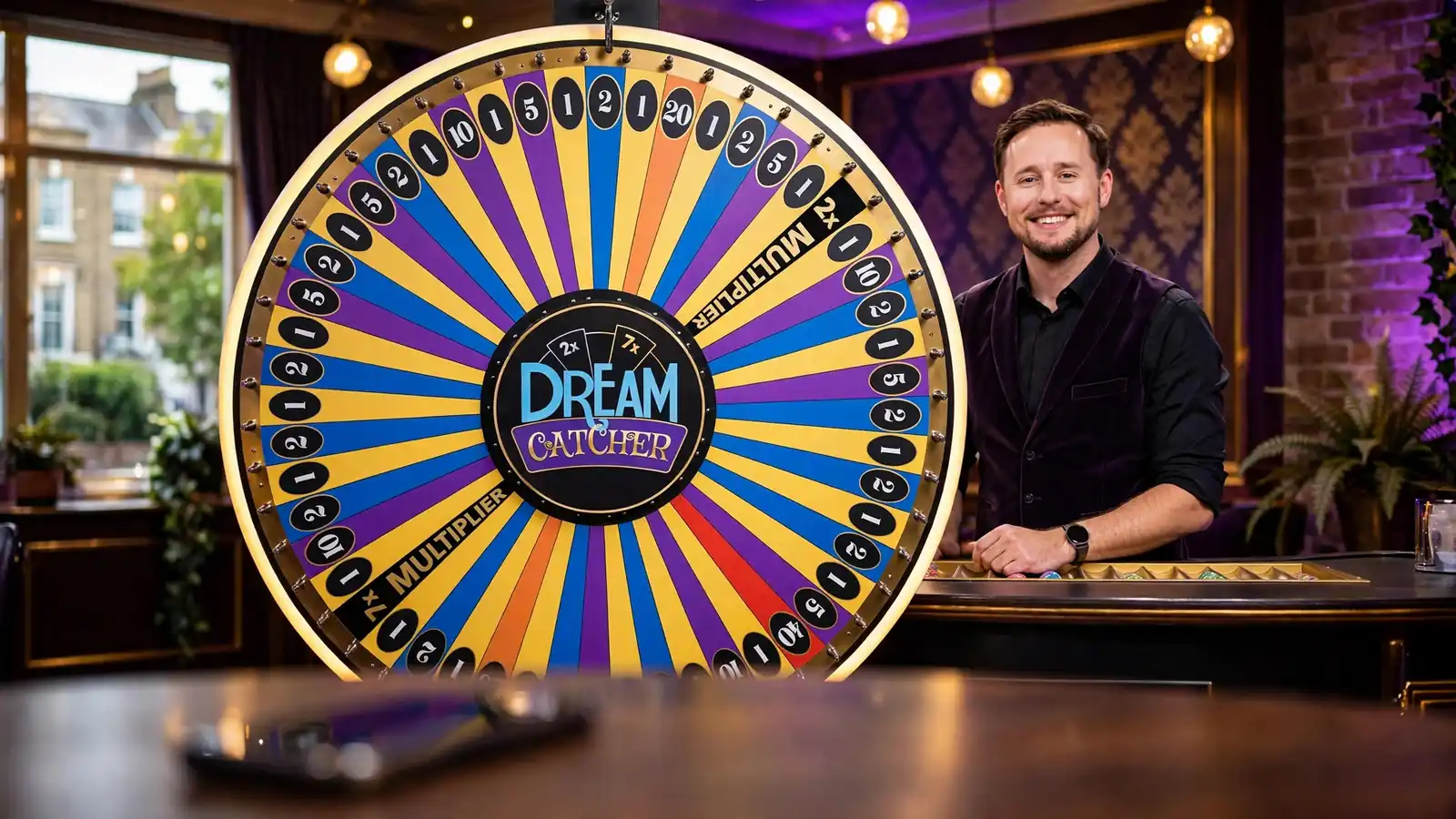
A live-dealer casino combines a video feed from a studio with a betting interface on the player’s screen. The dealer is a person, and the gameplay is streamed in real time. Bets are submitted through the interface rather than placed physically at a table. This is the basic format behind searches for a live Dream Catcher experience, but the format alone does not establish how any particular game is designed or offered.
The screen has two functions. The video shows the dealer and the live activity; the controls allow a player to select and submit a bet. These elements appear together, but they are not the same thing: seeing a game in progress does not itself place a wager. A bet must be entered through the interface, and the streamed action then provides the visual context for the round. Exact controls and game procedures depend on the game and the operator, so the general live format should not be mistaken for a description of Dream Catcher’s rules.
If you’re looking for a live Dream Catcher casino in the UK in 2026, payout times are one practical detail to check alongside the game itself. This guide notes the stated payout timeframe for each listed operator.
Britsino
Britsino lists a payout speed of 1–3 business days.
Zombillion
Zombillion lists a payout speed of 1–3 business days.
SlotoSport
SlotoSport lists a payout speed of 1–3 business days.
Chanze
Chanze lists a payout speed of 1–3 business days.
Dieselwin
Dieselwin lists a payout speed of 1–3 business days.
NightLuck
NightLuck lists a payout speed of 1–3 business days.
WinBeast
WinBeast lists a payout speed of 1–3 business days.
x3bet
x3bet lists a payout speed of 1–3 business days.
Amunbet
Amunbet lists a payout speed of 1–3 business days.
EvoSpin
EvoSpin lists a payout speed of 1–3 business days.
This differs from a wholly digital game, where the action is generated on screen rather than presented as a live studio feed with a human dealer. In a live-dealer game, the stream is part of the play itself: the dealer carries out the activity while the interface handles betting. The result is a format that brings a studio table to an online screen, not a physical casino table transported into the home.
A search for Dream Catcher online casino play can therefore point to several different expectations: a particular game, a live presentation, or a site that offers that game. Those are separate questions. “Live casino” describes how a game is presented; it does not, by itself, confirm a specific title’s rules, availability or features. Nor does a live video feed establish that every operator offers the same game or interface. The distinction matters because a familiar label can make a product seem more specific than the information actually supports.
For a UK player, the legal condition applies to the operator, not to the video technology. Live-dealer casinos may operate legally in the UK when they hold a UK Gambling Commission licence. A studio stream does not replace that requirement, and the appearance of a professional dealer is not evidence of an operator’s regulatory status. Legality and presentation are separate parts of the assessment.
The feed is real-time, but live play does not run at the pace of a purely digital version. A human dealer conducts the game, and the round follows that live activity rather than being presented as an instant sequence of on-screen results. Live games also have higher minimum bets than digital versions and depend on a stable internet connection. These are broad characteristics of the format, not a statement of a particular Dream Catcher table’s speed, stakes or technical requirements.
The video connection and the betting interface also perform different jobs. The stream allows the player to watch the dealer; the interface is where the player’s wager is entered. If the video pauses or the connection becomes unstable, the experience may be interrupted, but the exact handling of an interrupted session is specific to the operator and game. There is no basis for assuming a uniform procedure across live casinos. In practical terms, a reliable connection matters because the format depends on watching events as they happen, while the wager is managed through the on-screen controls.
The human element changes the presentation, not the underlying financial character of gambling. A dealer and studio can make the experience resemble a casino table, but they do not alter the fact that a player is staking money on a game. The visual detail can be more immediate than in a computer-generated presentation; it is not a reason to treat a wager as more predictable or to assume that the dealer’s presence changes the odds.
A live casino experience is therefore best understood as a combination of three parts: a studio, a real-time video stream and a betting interface. That description explains what “live” means in general. It does not establish that a particular Dream Catcher title is available at a given casino, whether it has a live dealer, or how its rounds and payouts work. Those details require information specific to the game and operator. The format supplies the setting; it is not a substitute for product-level terms.
The name Dream Catcher can point to a particular game, while “casino” may refer to the venue where someone hopes to play it. Those are separate questions. A game title does not, by itself, identify a casino operator, establish that the game is offered in the UK, or confirm the rules under which it runs. The distinction matters because search results and promotional descriptions can place the game name beside the word “casino” without answering any of those practical points.
The general meaning of a live casino is clearer. Live-dealer games show real-time play from a studio, with a human dealer and an on-screen interface for placing bets. That describes the format, not the mechanics of any specific title. It is therefore reasonable to understand interest in a Dream Catcher live casino as interest in finding a live game bearing that name; it is not reasonable to infer its wheel, rounds, outcomes, betting options or special features from the name alone.
A title can also be used in different contexts. A page might discuss a live game, promote a casino that offers live games, or use a game name as part of its marketing. Those references are not interchangeable. A casino review is about an operator; a game description is about the product; a live table screen is where play takes place. Each needs to be checked for what it actually identifies. When the distinction is blurred, a reader may mistake an operator claim for a rule of the game, or take a general explanation of live play as confirmation of a particular feature.
For Dream Catcher, a careful description should stop at the level that can be supported: it is a name associated with the game being sought, but the general characteristics of live-dealer play do not establish the specific game’s operation. No particular wheel or other equipment, betting menu, payout structure, round sequence, bonus feature, interface, or provider should be inferred without reliable game-specific information. Nor does a reference to Dream Catcher prove that the game is available at every casino, or at any particular UK casino. Availability is an operator-level matter and can vary; the name alone settles nothing.
The same caution applies to descriptions that call something “live”. In the live-dealer format, video of a studio game is streamed in real time and betting takes place through a digital interface. That general description does not show whether a particular product uses a physical wheel, a different device, or another arrangement. It also does not establish how long a round lasts, when betting closes, which selections can be made, or how a win is calculated. Those details belong to the rules and paytable for the specific game, not to the broad label “live casino”.
This is why a useful game page needs more than a title and an attractive image. Its rules should identify what happens during a round, what the available bets mean, and how returns are determined. The paytable should be consistent with those rules. If a description refers to a feature but does not explain its effect on play or payouts, that reference has little value for estimating risk. A label can tell a reader what to look for; it cannot replace the terms that determine the financial result.
There is also a difference between finding a game name and finding a playable version. A page may be informational rather than a live table, and an operator’s general live-casino section does not confirm that it carries a specific title. Conversely, a game-specific page should not be treated as proof of the operator’s wider conditions. The available information needs to connect the title, the actual game rules and the site hosting it. Without that connection, comparisons between “Dream Catcher casinos” are mostly comparisons of wording rather than verified game access.
For a UK reader, the phrase Dream Catcher casino therefore describes an intention more clearly than it proves a product or destination. The relevant questions are concrete: is the named game actually presented, do its rules and paytable explain the play, and does the page identify the operator responsible for offering it? A general account of live-dealer play can answer none of those game-specific questions. It only explains the setting in which a live game may be offered.
The safest reading is neither to assume that every mention is misleading nor to treat the name as sufficient evidence. It is to separate what the name signals from what the game terms establish. Until those terms identify the mechanics and payouts, claims about Dream Catcher’s specific play remain unsubstantiated. That is a limit on what can be concluded, not a hidden rule of the game.
A search for the best live Dream Catcher casino is really a search for a suitable place to play, not proof that any particular site is best. The useful starting point is a baseline that can be checked independently of rankings: whether the operator is legally permitted to offer live casino games to people in the UK, and whether the conditions of live play fit the intended use. That approach avoids treating a prominent position on a comparison page as evidence of quality.
In the UK, live-dealer casinos are legal when the operator holds a licence from the UK Gambling Commission. The licence is therefore a threshold condition, not a decorative badge. A site without the required UK licence does not meet the legal baseline for serving UK players. Conversely, the existence of a licence does not, by itself, establish that a particular game is available, that its rules suit a player, or that the experience will be convenient. Those are separate questions and should not be collapsed into a single label such as “best”.
This distinction matters where a game name appears in a casino search. The phrase “best Dream Catcher casino UK” can imply that the same game is offered consistently across operators, but availability should not be assumed from the wording of a page or from a general live-casino menu. A ranking may help identify operators for further checking; it cannot replace confirmation of the relevant game and its conditions. If the game itself is not clearly identified in the operator’s own information, the ranking has not resolved the central question.
A sound assessment separates legal status from the mechanics of live play. A live game uses a stream of real-time activity, with bets submitted through an on-screen interface, rather than the entirely digital pace of a conventional computer game. That format has consequences for the playing conditions. Live games move more slowly than digital versions, have higher minimum bets, and depend on a stable internet connection. These are not minor interface details. They affect how quickly decisions can be made, the level of stake required to participate, and whether interruptions could interfere with the session.
The slower pace changes the value of a comparison. A casino that appears attractive because it carries a live title may still be a poor practical fit if the table’s minimum stake exceeds the amount intended for play, or if the connection cannot sustain the stream. A faster digital alternative may allow more frequent rounds, but that is a different format rather than a direct substitute for live dealing. Neither pace is inherently better; the relevant issue is whether the format and its costs match the purpose of play.
Minimum stakes also make broad claims about “best” difficult to interpret. An operator comparison that does not state the applicable table conditions provides little basis for estimating how much participation requires. The general fact that live games have higher minimum bets than digital versions does not determine the minimum for any specific table. That figure can vary by game and offering, so a general description should not be mistaken for a quote or a promise. The meaningful comparison is between the stated conditions of the actual game and the budget allocated to it.
Connection quality belongs in the same assessment, although it is not a measure of an operator’s licensing status. A real-time stream needs a stable internet connection; without one, the format can become difficult to follow. This is a practical constraint, not a claim that a particular network speed or device will guarantee uninterrupted play. A casino’s legal status cannot compensate for an unstable connection, just as a smooth stream cannot make an unlicensed operator lawful.
For readers comparing live Dream Catcher casinos, the decision therefore has distinct parts: establish that the operator holds the UK licence required for live casino play, confirm that the named game is actually offered, then examine the specific table conditions and whether the live format is workable. These checks do not produce a universal winner. They produce a more useful result: a distinction between a site that meets the legal threshold and a game offering whose actual conditions are appropriate.
A ranking can compress information, but it cannot make these distinctions disappear. Licensing answers whether the operator meets the UK legal requirement. The stated game and table conditions answer what is being offered. Pace, minimum stakes and connection requirements describe the basic demands of live play. Keeping those questions separate makes “best” a matter of verifiable fit rather than a label attached to a list.
Live casino play has different practical demands from a digital game. The pace is slower, the minimum bets are higher, and a stable internet connection is required. These conditions apply to the live format generally; they do not establish the rules or specific operating details of Dream Catcher.
The slower pace changes how a session unfolds. A digital game can move from one round to the next without the pauses associated with live play. In a live game, the action proceeds at a more measured rate. That affects the time spent playing as well as the number of decisions that can be made within a session. A game that appears simple on screen is still part of a live format, so its pace should not be assumed to match a digital equivalent.
This distinction matters when comparing games by appearance alone. A familiar visual theme does not make the live version function like an automated game. The relevant practical point is the format: live games run more slowly than their digital counterparts. That is a general comparison, not a prediction of the length of any particular round or session.
The minimum bet is another material difference. Live games have higher minimum bets than digital versions. This affects the cost of participation from the outset: the lowest available stake may be higher, even before considering how many rounds are played. No single minimum can be applied across all live games, so the general comparison should not be mistaken for a figure or limit for Dream Catcher.
A stable internet connection is also part of the practical requirement. Live play depends on an ongoing connection, and an unstable one can make participation less reliable. The quality and continuity of the connection therefore matter before play begins, not only after a session is under way. This is a general requirement of live games; it does not confirm the technical specifications of a particular title.
Taken together, the conditions affect the basic calculation of a session. Slower play means more time may pass between rounds than in a digital game, while the higher minimum stake changes the amount required to take part. A stable connection is necessary for the live format. None of these points tells a player what a particular game’s rules are, or whether its table conditions suit a given budget.
For anyone considering whether to play a Dream Catcher casino game in a live setting, the sensible distinction is between general format and game-specific terms. The live format has a slower pace, higher minimum bets than digital versions, and a need for a stable connection. Those are practical conditions to account for; they should not be treated as confirmation of Dream Catcher’s individual rules, table limits or availability.
A search for a casino wheel can point to very different games. Roulette offers a useful comparison because its wheel and number layout are defined, but those rules should not be transferred to Dream Catcher. The fact that both may be described as wheel games does not establish that they share the same equipment, outcomes or betting mechanics.
In live roulette, a dealer spins a physical wheel. Computerized roulette instead uses a Random Number Generator to determine the result. The distinction is about how the outcome is produced: one is shown through a live dealer and physical wheel, while the other is generated by software. A filmed wheel and a digital wheel are therefore not interchangeable descriptions of the same format.
That comparison does not verify how a Dream Catcher casino wheel operates. Roulette rules can clarify what a conventional wheel game involves, but they cannot confirm the layout, result process or available bets in a separate game. A label such as “live” also does not, on its own, establish roulette-style rules.
The two roulette layouts differ in their green pockets. European Roulette has a single green pocket marked 0. American Roulette has two: 0 and 00. That extra pocket changes the stated chance of winning a number bet: the odds are 1 in 37 on the European wheel and 1 in 38 on the American wheel.
Features a single green pocket marked 0, with odds of 1 in 37 for a number bet.
Features two green pockets (0 and 00), with odds of 1 in 38 for a number bet.
The difference is small in appearance but material in the calculation. A player selecting a number faces one additional losing pocket on the American layout. The wheel design, not a change in the selected number, accounts for the difference in those odds.
These figures belong to roulette and should remain attached to that game. They do not describe the probability of an outcome on Dream Catcher, nor do they establish that its wheel uses numbered pockets. Treating a general wheel-game search as proof of roulette mechanics would turn a comparison into an unsupported claim.
For anyone assessing a wheel game, the useful first distinction is therefore its actual format: whether it uses a physical roulette wheel with a dealer, a computerized random outcome, or another set of rules altogether. Roulette provides a defined reference point, including its physical-versus-computerized distinction and its two common pocket layouts. It is not a substitute for the rules of a different game.
A live casino site serving players in the UK needs the right regulatory basis before its games or offers become relevant. Live-dealer gambling is legal in the UK when the operator holds a licence from the UK Gambling Commission. The operator’s licence is therefore the first check for a site presenting a live Dream Catcher casino game.
The check concerns the company running the gambling service, not merely the name shown on a page or game lobby. A game title, studio feed or polished website does not establish that the operator is licensed. The relevant point is whether the business offering real-money play holds a current UK Gambling Commission operating licence.
The Commission’s official website, gamblingcommission.gov.uk, is the regulator’s reference point. The operator’s identity should match the business named in its licensing information. If the site gives no clear legal identity, or the details cannot be matched to a UK licence, the regulatory basis has not been established. A familiar game name does not fill that gap.
This check applies whether a site promotes one live game or a larger casino catalogue. It does not confirm that a particular title is currently available, nor does a game listing prove that the operator has a licence. Those are separate matters. Licensing establishes whether the operator is authorised to serve the British market; it is not a rating of the site’s value or a promise about a game’s rules.
The distinction matters when several websites use similar wording for a live Dream Catcher casino site. Names and promotional descriptions are easy to reproduce; the operator’s legal identity and licence are the material points. A result that cannot be tied to a licensed operator should not be treated as verified simply because it describes itself as a UK casino.
For a live casino, the licence check is a threshold, not a verdict on every other term. It answers a narrow question: whether the operator has the regulatory authority required to offer gambling to UK customers. It does not settle the game-specific details or financial conditions, which need to be assessed separately.
This content is for entertainment purposes only and is not gambling advice.
A request to try Dream Catcher in demo mode is not evidence that a free version is available. Availability depends on the operator and the game offering displayed there; it should not be assumed from the game’s name or from a general live-casino page. The same applies to a live demo: the label alone does not establish what can be accessed or how it works.
If a site provides a non-cash version, its value is limited to what that version actually lets a player inspect. It may give an indication of the displayed interface or pace, but it does not establish the terms of real-money play. In particular, a demonstration cannot confirm the cash-game table rules, any staking limits, or whether the same options are available when money is involved. Those conditions need to be checked in the live game itself before a stake is placed.
Free play also does not produce real payouts. A displayed result in a demonstration is not a cash balance, and it cannot show what a player would receive from real-money play. Treating simulated outcomes as evidence of future results would confuse presentation with payment.
For a Dream Catcher demo, the first practical check is whether the operator actually offers a version marked as free or practice play. If it does, the stated mode and its rules should be read rather than inferred from a button or promotional description. If no such option is shown, there is no basis for assuming that the game can be tried without staking.
A demo may be useful for familiarising oneself with an interface, where one is available. It is not a substitute for the rules and paytable attached to real play, nor evidence that the real game will produce similar outcomes. The distinction is straightforward: access to a demonstration, if offered, concerns familiarisation; real-money play concerns the operator’s actual terms and possible financial loss.
This distinction matters particularly with a live-dealer format, where a streamed presentation can look like the cash game without establishing that the same conditions apply. A free-play label should therefore be read narrowly: it does not promise real winnings, confirm a particular Dream Catcher demo, or remove the need to check the terms before staking. This information is for entertainment purposes only and is not gambling advice.
A Dream Catcher casino review is useful for financial decisions only when it separates the game from the offer attached to it. A description of the live table does not establish whether bonus funds can be used there, how wagers count towards release conditions, or whether winnings remain subject to further restrictions. Those details belong in the promotion’s terms, not in the review’s general verdict.
The key figure is the game-weighting rate. Live games can contribute only a small share towards a bonus wagering requirement; a stated rate such as 10% means that only a fraction of eligible stakes counts towards the requirement. The remaining portion does not disappear from the account, but it does not advance bonus clearance at the same rate as fully weighted play. A review that says a game “contributes” without giving the percentage leaves the calculation incomplete.
The offer itself also matters. A specialist review describes UK welcome promotions as mainly free spins on slots, which cannot be used at live tables. That is a report about the offers it assessed, not a condition that applies to every promotion. A review should identify the particular offer and state whether it applies to live play; a headline bonus amount alone cannot answer that.
For a review of Dream Catcher live casino play, the same distinction applies: commentary about the experience is not evidence that a promotion covers the game. The terms need to specify eligible games, the weighting assigned to live play, any maximum bet while wagering, and what happens to bonus funds or winnings if conditions are not met. Where a review omits those points, its positive assessment says little about the financial value of the offer.
A simple comparison keeps the assessment grounded: record the bonus type, whether live tables are eligible, the weighting percentage, and any applicable stake restriction. If those terms are not stated clearly, the value cannot be calculated from the review. The offer may still be usable, but its cost and likely contribution to clearing the requirement remain uncertain. Promotional wording is not a substitute for the conditions that govern the balance.
The budget belongs outside the game, not inside the next decision. A fixed amount set before play defines the maximum planned cost; once it is reached, continuing would turn a control into decoration. The same limit should apply whether a live table is being considered for Dream Catcher or another game. It is a general safeguard, not a statement about any particular table’s limits or rules.
Table conditions determine what a stake can do. Before play begins, the rules should be checked for the accepted bet types, how outcomes are settled and any limits that apply. The paytable should also be reviewed: it sets out the return associated with each eligible outcome. A stake placed without that information has an unknown possible return. No amount of attractive presentation changes the calculation.
These checks matter because live play is not a fixed-cost activity. A sequence of bets can consume a budget quickly, and a previous result does not make a later one a reason to increase the stake. Chasing losses or extending a session to recover them can take spending beyond the limit already set. A budget works only when it remains binding after an unfavourable result.
For a live Dream Catcher session, the sensible financial approach is therefore conditional: first establish that the table’s rules and paytable are available and clear, then decide whether its conditions fit the planned budget. If the information needed to assess a stake is unclear, there is no sound basis for placing it. The game’s name does not establish its table limits, payouts or individual rules.
This material is for entertainment purposes only and is not gambling advice.
A welcome offer has value only if its conditions match the games intended for play. A specialist review describes most UK welcome offers as free spins on slots, which cannot be used at live tables. That distinction matters for anyone comparing a Dream Catcher offer with the cost of live-game wagering: a slot promotion does not become live-casino credit simply because the same account provides access to both.
Cash bonuses can have a different restriction. Live games may count towards wagering requirements at only a small share of their stake; a stated weighting of 10% means that only a fraction of live play is credited towards completing the requirement. The balance still has to be met through eligible wagering, if the terms allow the game at all. A large headline bonus can therefore produce little usable progress at a live table.
The terms need to be read as a calculation, not as a headline. Check whether live games are eligible, what weighting applies, and whether the offer is restricted to specified games. If free spins are the entire promotion, their value is confined to the eligible slot play and any conditions attached to the spins. If live play is included, the weighting determines how slowly it contributes.
A comparison between casinos is meaningful only when the same conditions are counted: the qualifying offer, eligible games, weighting and any maximum-bet rule stated in the terms. Without those details, the advertised amount says little about the value available for live play. Bonus conditions can reduce the practical value to a small part of the headline figure; declining the offer may be the more straightforward calculation.
This is entertainment information, not gambling advice.
Choose and submit your bet through the on-screen interface, then watch the dealer spin a physical wheel. You win if the ball lands on a number covered by your bet.
Common roulette variants include European, American and French Roulette. European Roulette has one zero, American Roulette has 0 and 00, and in French Roulette an even-money bet loses only half when the ball lands on zero.
Choose an operator that holds a UK Gambling Commission licence. A stable internet connection is also important for watching live play.
European Roulette has one green pocket, 0, while American Roulette has two, 0 and 00. The odds of winning are 1 in 37 on European Roulette and 1 in 38 on American Roulette.
In roulette, straight-up bets have a 2.9% house edge, while other bets have a 2.7% edge. French Roulette also gives an advantage on even-money bets: they lose only half when the ball lands on zero.