XRP availability can differ by account and transaction direction, while fees, eligibility and payout routes affect whether it is practical.
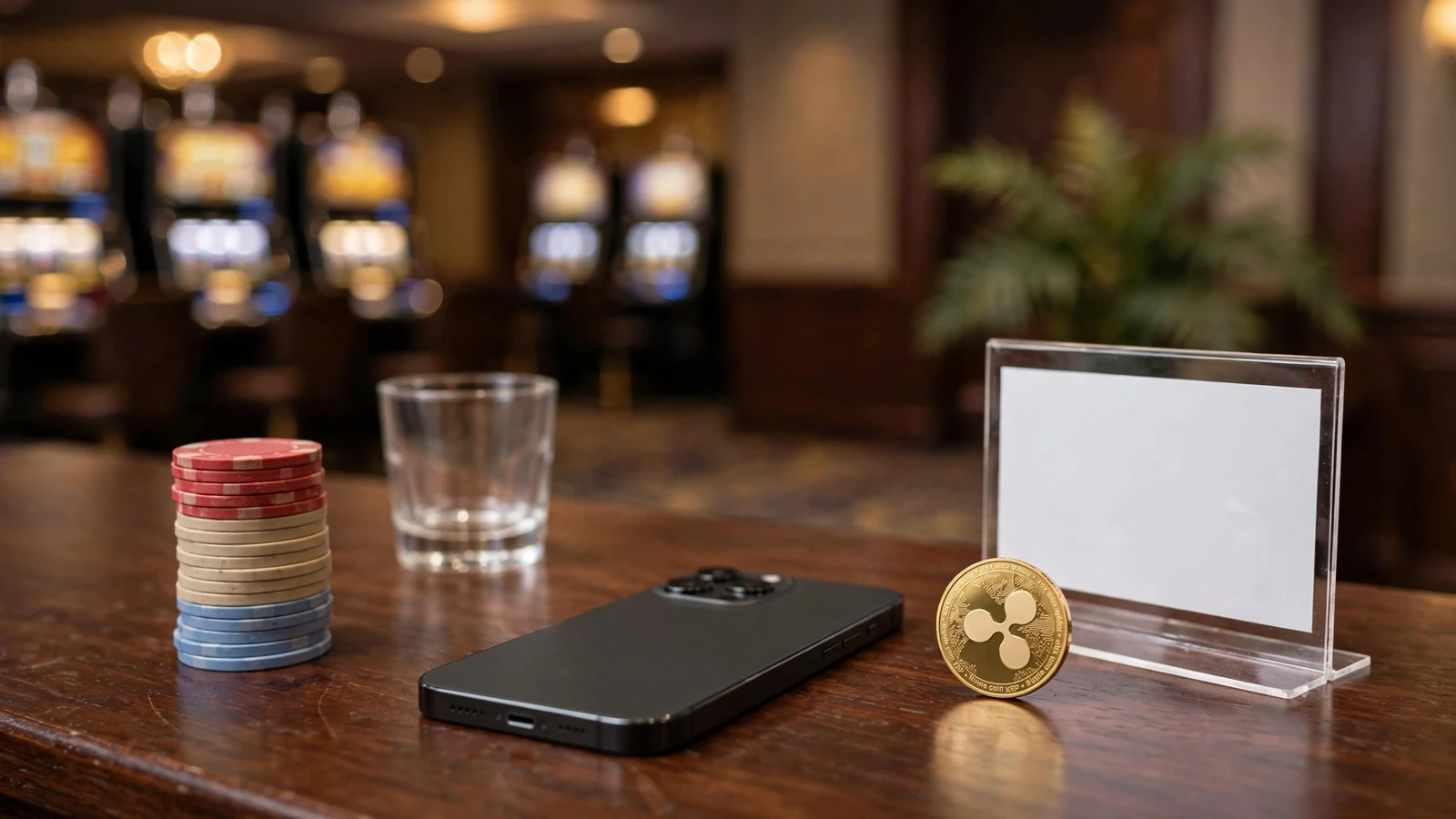
A reference to cryptocurrency is not confirmation that a casino accepts Ripple XRP. Specialist casino reviews describing payment options across the sites they cover mention Visa, Mastercard, bank transfers, e-wallets and several cryptocurrencies. That establishes that crypto appears in the wider payment mix; it does not establish that XRP is among the supported coins at any particular casino.
The distinction matters because “crypto accepted” can describe a broad category rather than a usable payment route. A casino may support one cryptocurrency while not supporting another. Even where XRP is named in general information, that alone does not confirm that a UK customer can use it through the casino’s current payment system. The relevant claim is specific: XRP is available to the account in question, for the transaction direction in question.
Deposit acceptance and withdrawal support are separate conditions. A site might allow an XRP deposit without offering XRP as a payout route. Conversely, a general statement about crypto withdrawals does not prove that XRP can be used to fund an account. Treating both as one feature turns an incomplete payment description into a stronger promise than it warrants.
When looking for a UK casino that accepts XRP, check that the available payment options match your needs. The payout timeframe is also worth considering when reviewing the options.
Britsino
Britsino lists a payout speed of 1–3 business days.
Zombillion
Zombillion lists a payout speed of 1–3 business days.
SlotoSport
SlotoSport lists a payout speed of 1–3 business days.
Chanze
Chanze lists a payout speed of 1–3 business days.
Dieselwin
Dieselwin lists a payout speed of 1–3 business days.
NightLuck
NightLuck lists a payout speed of 1–3 business days.
WinBeast
WinBeast lists a payout speed of 1–3 business days.
x3bet
x3bet lists a payout speed of 1–3 business days.
Amunbet
Amunbet lists a payout speed of 1–3 business days.
EvoSpin
EvoSpin lists a payout speed of 1–3 business days.
The same caution applies to phrases such as “XRP casino” or “Ripple-friendly”. They may describe a site’s broad positioning, a past payment option or a feature available only in some circumstances. They do not, by themselves, show that XRP is currently available in the cashier for a UK account. Nor does a list of digital currencies confirm that every listed coin can be used for both deposits and withdrawals.
For anyone asking whether online casinos in the UK accept Ripple XRP, the defensible answer is conditional: the general presence of cryptocurrency on casino payment pages does not settle the question for XRP. A specific casino must offer XRP as a selectable method, and the relevant transaction direction must be supported. If the claim concerns deposits, deposit support needs to be established; if it concerns payouts, withdrawal support needs its own confirmation.
This is narrower than asking whether a casino takes cryptocurrency. It is also why a list of sites labelled as XRP casinos cannot be treated as proof merely because it repeats the coin’s name. A useful claim identifies the actual payment option and what it can do. Without that distinction, “accepts crypto” leaves the central point unresolved.
The practical standard is therefore not a general mention of digital currency, but a casino-specific statement of XRP support. Deposit availability and payout availability should not be inferred from one another. Until both are independently clear, a claim that a site accepts XRP establishes, at most, an unverified possibility—not a confirmed route for the account.
 Casinos That Accept Siru Mobile in the UKA review names Mr Vegas and Videoslots for Siru Mobile; learn why that does not establish availability elsewhere or make it interchangeable…
 Casinos That Accept POLi in the UK: Payment ChecksLearn how to verify POLi at the cashier and separate payment access from slot availability. A specialist review puts starting minimums at…
A payment method and a promotion are separate terms of a casino account. A cashier may show a deposit route without that route qualifying for a welcome offer, while a promotion may be available only when its stated payment conditions are met. For anyone considering an XRP deposit, the relevant calculation is therefore not simply whether the account can be funded. It is whether the chosen funding route leaves the advertised offer intact.
No bonus value should be assigned to an XRP deposit until the promotion’s terms explicitly cover it. General references to cryptocurrency do not establish that XRP qualifies, and acceptance of a payment does not itself confer eligibility. The operative wording is the promotion’s payment-method clause, read alongside the cashier options available to that account. If the terms are unclear, the offer should be valued as unavailable rather than assumed to apply.
That distinction changes the comparison between a deposit with an offer and one without it. The headline bonus is not cash already in the balance: it is conditional value. Its practical worth depends on whether the deposit qualifies, what restrictions apply to the bonus funds and whether the player can meet the stated conditions. A large advertised amount can therefore have a lower usable value than a smaller offer with clearer eligibility. Where the payment method is excluded, the nominal bonus contributes nothing to the account’s usable funds.
Payment exclusions are not limited to cryptocurrency. A specialist review reports that PayPal may be excluded from bonus eligibility, while Skrill and Neteller are often excluded from promotions at sites that offer them. Those observations are not universal rules and can change with an operator’s current terms. They are a reason to check the specific promotion, not a basis for treating every casino or every offer alike. The payment route selected at the cashier may affect eligibility even when the method is otherwise available for deposits.
The comparison should be made in two passes. First, establish whether the intended payment method can be used for the deposit. Then check whether that exact method is included in the promotion’s terms. A broad label such as “crypto” is not precise enough to settle whether XRP qualifies; nor does a general list of supported currencies establish how a bonus treats them. The terms need to connect the particular payment method with the particular offer.
The offer’s conditions matter after eligibility is confirmed. The stated bonus amount is only one component. Restrictions on which funds can be withdrawn, qualifying play requirements, game exclusions, expiry conditions and any maximum cash-out rule can all affect the amount that ultimately remains available. These details vary by promotion, so no standard bonus calculation can be applied across casinos. The useful comparison is between the deposit and the value that can actually be retained after every condition has been met.
A simple decision rule follows: compare the account balance without the promotion against the balance that would remain if the offer’s conditions were completed. If an excluded payment route removes the bonus, the relevant alternative is not the advertised bonus amount; it is the difference between those two outcomes, with the offer’s restrictions included. If the terms do not make that difference calculable, the promotion is not a reliable part of the payment decision.
Changing payment method solely to qualify can also alter the transaction’s practical terms. A route that permits a promotion may have different handling or account requirements from the intended route. Those costs belong in the comparison, but they should not be confused with bonus eligibility itself. The offer can be worthwhile only if the payment method is acceptable, the promotion expressly applies and the conditions leave a positive usable value.
For XRP specifically, the conservative treatment is straightforward: count the promotion only when its current terms expressly include the relevant deposit method. Otherwise, assess the deposit without a bonus. That avoids turning a promotional headline into an assumed credit—and keeps the comparison tied to money that the account can actually use.
The amount leaving a bank account or crypto wallet is not necessarily the amount credited to a casino balance. A specialist payments review identifies several possible deductions along the route: a charge imposed by the casino, a payment-provider fee, a fee from the card issuer or bank, a less favourable exchange rate, or a blockchain network charge. Which of these applies depends on the transaction and the parties processing it. The useful comparison is therefore the final balance received, not a single advertised fee.
For a deposit intended to fund play in pounds, the calculation has two sides. First, establish what leaves the funding source, including any fee charged before the payment reaches the casino. Then establish the sterling value actually credited after any conversion and deductions. The difference between those figures is the cost of funding the balance. A route with no visible casino fee can still deliver less value if another party charges for processing or conversion.
A conversion spread is the gap between the market rate and the rate applied to the transaction. It may be built into the quoted rate rather than displayed as a separate charge. A specialist payments review notes that this difference can outweigh a visible flat fee: a clearly stated charge is not automatically the larger cost.
The comparison needs to use the rate applied at the point of conversion, not a general market quotation viewed elsewhere. If a deposit starts in XRP but the casino account is credited in pounds, the value depends on how the conversion is handled and when the rate is set. A price movement between initiating and processing a transaction can also affect the sterling value; no fixed XRP-to-pound amount should be assumed in advance. The relevant figure is the amount credited, once the transaction has settled.
The same principle applies when a funding route passes through another currency. More than one conversion may be involved, and each rate can affect the final amount. A small-looking difference at each stage can accumulate. Without the actual transaction rate and fee schedule, a comparison based only on the headline rate is incomplete.
 Apple Pay at UK Casinos: Payment Options ExplainedLearn why Boku deposits are not Apple Pay, how mobile-billed payments work, and what a casino cashier’s payment options can—and cannot—confirm.
 Casinos That Accept Citadel in the UKLearn how to check Citadel deposit support, understand return-to-source withdrawals and distinguish payment access from slot availability or bonus eligibility.
An XRP transfer may involve a network charge, separate from any charge imposed by the casino or a service handling the transaction. The network cost is not the same thing as a casino deposit fee. It should be counted once, at the point where it is deducted from the amount being sent or received. If a provider quotes a net amount after its own charges, adding those charges again would overstate the cost.
The practical measure is the amount that reaches the casino balance relative to the amount surrendered from the source. For an XRP deposit, that means checking the XRP amount debited, any transaction or provider charge, the conversion rate used, and the sterling amount credited. If the cashier displays a pre-conversion estimate, it should not be treated as the settled result. The conversion may be completed by a service at a different stage of the payment.
This calculation does not establish whether a particular casino supports XRP. It applies only once a route is available and its terms can be checked. A reference to cryptocurrency in general is not enough to identify the charges for a specific XRP transaction.
There is no single payment route that is cheapest for every transaction. A specialist payments review recommends comparing casino charges, provider costs, bank or issuer fees, conversion spread and network expense against the actual amount being deposited. The amount matters because a fixed fee and a rate-based cost affect different-sized transactions differently. No method can be labelled the lowest-cost choice without the applicable terms and the amount being compared.
Comparing Payment Routes
Record total value taken
Identify the total amount leaving the funding source, including any fees charged before the payment reaches the casino.
Identify credited value
Establish the final sterling value actually credited to the casino account after all conversions and deductions.
Calculate the difference
Subtract the credited value from the total value taken to determine the actual cost of funding the balance.
A useful comparison records three figures for each route: the total value taken from the funding source, the value credited to the casino account, and the difference between them. Where the casino or provider displays only part of the calculation, the missing part should remain unresolved rather than being treated as zero. A route that appears free at the cashier may still have a bank charge or an unfavourable conversion rate outside it.
For an XRP-to-sterling deposit, the decisive figure is therefore not the XRP quantity alone, nor a claim that the transfer has no deposit fee. It is the net sterling balance after all applicable charges and conversion. The lowest visible fee can be an expensive way to fund an account when the exchange rate quietly takes the larger share.
Payment logos establish only that a method is listed somewhere in the operator’s materials. They do not show that the method is enabled for every UK account, or that every product carrying the same brand is eligible. A specialist review listing Visa and Mastercard is a useful indication of the methods it found, not a substitute for the live cashier.
That distinction matters for searches about XRP payments. A reference to cryptocurrency does not establish that XRP is available, and an XRP label alone would not show whether the route works for the particular account or transaction. The cashier’s available options are the practical test of method compatibility. A site’s mobile version does not change that: a payment option visible on a desktop page is not proof that it is enabled for a mobile account, or vice versa.
Debit cards are a familiar route at UK casinos, with Visa and Mastercard among the brands commonly accepted. Even so, the brand name does not settle eligibility. The cashier should identify the available card route, while the card product itself must be a debit card and accepted for that transaction. A card logo on a general payments page is not confirmation that every card carrying it will work.
Credit cards are different. The regulator’s ban on credit-card gambling took effect on 14 April 2020 and has not been relaxed. UK-licensed remote gambling licensees cannot accept credit-card payments for gambling, including credit-card funds routed through a money service business. They also cannot accept wallet payments where the wallet permits credit-card funds to be used for gambling. A card carrying the Visa or Mastercard name is therefore not enough to identify an eligible payment: its type and funding route matter.
The distinction is not between card brands but between payment products and how they are funded. Debit-card acceptance does not create a credit-card exception, and a payment service cannot make prohibited credit funding acceptable simply by sitting between the card and the casino. Where the cashier offers a card option, the eligibility of the actual product remains decisive.
For a payment route advertised as XRP, the same narrow reading applies: a broad cryptocurrency reference is not confirmation of an XRP option, and a displayed method is not necessarily available to every customer. The route needs to appear as an available choice in the relevant cashier. This establishes what that account can select, rather than what a site’s general payment list suggests.
The useful comparison is therefore not a catalogue of logos. It is the account-specific cashier, the exact payment product, and whether the route is permitted for gambling in the UK. A logo indicates a brand; eligibility depends on the product behind it.
A payment currency and a casino balance currency are not necessarily the same thing. Even if a cashier were to offer XRP, that would not establish that the account balance—or the balance used for slot play—would be held in XRP. The payment could be converted before it appears in the account.
A specialist review of casino payment options reports GBP support on the pages it covers. That does not confirm the account currency at every site, or establish that XRP can be used for deposits or slot play. The account’s chosen currency needs to be checked in the operator’s own terms or account settings before any transaction. If the balance is set in GBP, the displayed slot balance is a sterling amount, regardless of the currency used to fund it.
That distinction matters to the amount available for play. If XRP is converted into GBP, the credited value is determined by the conversion applied to the transaction. If the account is denominated in another currency, a further conversion may affect the balance shown. A payment confirmation in XRP therefore cannot, by itself, establish the final account balance in the currency used for play.
The relevant check is not whether a site describes itself as a crypto casino, or whether a slot page displays a balance. It is whether the account currency is stated clearly and whether the payment route’s conversion into that currency is explained. The slot balance should be identifiable in the same denomination as the account balance. If the terms leave unclear which currency the balance uses, the amount available for play cannot be calculated reliably in advance.
 Casinos That Accept Zimpler in the UK: What to CheckLearn why a slot listing does not prove Zimpler is accepted, and how to check the cashier, account terms, limits and withdrawal…
 Casinos That Accept Giropay in the UK: What to CheckLearn how to check cashier support, whether a Giropay deposit qualifies for a slot promotion, and why deposit and withdrawal routes may…
This is separate from whether particular slot titles can be played. No game listing establishes that a title accepts XRP directly. Slot play may draw from the casino account balance rather than from a cryptocurrency wallet, so the account denomination remains the practical point to establish. XRP branding in a payment description is not evidence of an XRP-denominated slot balance.
For a UK account, GBP may make the balance easier to read against deposits and withdrawals made in sterling, but it does not remove conversion risk if the incoming payment is in XRP. The credited sum and the account balance can be expressed in different currencies, and the conversion basis determines how they relate. A clear currency setting avoids treating a payment amount as though it were already the amount available to play.
Before the first transaction, the currency should therefore be confirmed in the account settings and the payment terms, not inferred from a logo, a slot lobby or a general reference to cryptocurrency. The useful distinction is simple: the currency accepted at the cashier, the currency credited to the account, and the currency shown in the slot balance may be separate. Only an explicit statement linking them supports a reliable calculation of the playable balance.
When XRP is not offered, the practical alternative depends on what the route needs to do: fund an account, return a balance, or both. A payment method shown on a casino’s information page is not automatically available to every customer, so the cashier’s options remain the relevant comparison.
Can provide instant deposits and fast withdrawals; requires accounts in the same customer's name.
Commonly accepted via Visa and Mastercard for deposits, but payout routes must be confirmed separately.
A prepaid voucher used for deposits only; it cannot be used as a withdrawal method.
Includes Skrill, Neteller, Jeton, and PayPal, though availability is site-specific and withdrawal support varies.
Open banking and bank transfers can be useful where both deposit and payout routes matter. A specialist review reports that these methods can provide instant deposits and fast withdrawals at many sites; that is a site-dependent possibility, not a timing promise for every transaction. Bank transfers also involve the player’s bank details, so using an account in the same customer’s name helps avoid basic ownership mismatches. The cashier’s listed route and the casino’s own processing terms determine whether a particular transfer is usable.
Debit cards are another established UK deposit route, with Visa and Mastercard commonly accepted by UK casinos. Their presence does not establish that every card product will work, or that the same route can return a withdrawal. A card can therefore be a straightforward deposit substitute only where the casino confirms its eligibility and explains the available payout route.
Paysafecard is a different kind of fallback: it is a prepaid voucher for deposits, not a withdrawal method. It can separate the deposit from a bank account, but it cannot complete the return leg of a payment. Any payout would need to follow the casino’s permitted process, rather than being assumed to go back through the voucher.
 Casinos That Accept Google Pay in the UKLearn how to check cashier support, whether Google Pay deposits meet bonus terms, and why a deposit does not establish withdrawal availability.
 Casinos That Accept Revolut in the UK: Payment GuideLearn why Visa or Mastercard support does not guarantee a Revolut card will work, and how to check the casino’s payment route.
E-wallets offer another possible deposit route. Skrill and Neteller are listed at some sites, but availability is not universal, and their presence in a cashier does not by itself establish withdrawal support. Jeton is described in a specialist review as remaining available at a handful of UK online casinos in 2026; that limited coverage makes a live check particularly important. PayPal may also appear as an option, but its availability is site-specific.
The useful comparison is not simply which method can replace XRP at the deposit stage. It is whether the route is available to the account, whether it supports the intended transaction direction, and whether it leaves a workable way to withdraw. Where a method is deposit-only, or the casino does not confirm payouts through it, the alternative may solve only half the payment problem. A named account used consistently for deposits and withdrawals is often the cleaner arrangement, subject to the casino’s own rules.
A claim that a casino accepts XRP needs to be checked against the operator’s live payment terms, not treated as proof that every XRP transaction is available. A specialist review may describe a site’s payment options, but that description is a starting point: the cashier and the operator’s own terms determine what can be done on the account at the time of checking.
The distinction matters because “accepts XRP” can mean different things. XRP might appear in general information about cryptocurrencies without being selectable for a deposit. A deposit option does not, by itself, establish that withdrawals can be made in XRP. Nor does a reference to a crypto payment route confirm that XRP specifically is supported. The relevant evidence is an XRP option shown for the intended transaction direction, together with terms that apply to the account.
A practical check has several parts:
The payment information found in specialist review material covers Visa, Mastercard, bank transfer, e-wallets and several cryptocurrencies. That range does not establish XRP support at any particular casino. A general list of crypto assets is not a site-specific confirmation, and a site-specific deposit listing is not confirmation of a matching withdrawal route. Those are separate claims and should be checked separately.
Keep the wording of the claim precise. “XRP mentioned” is not the same as “XRP available for deposits”; “XRP deposit available” is not the same as “XRP withdrawals available”. If the cashier does not show the asset, or the terms do not explain the relevant direction, the claim remains unconfirmed. A contact response can clarify an ambiguous term, but it should identify the exact currency and whether the answer concerns deposits, withdrawals or both.
Account ownership should also match the payment route. Using one account in the same customer’s name consistently for deposits and withdrawals is the cleaner arrangement; mismatched ownership details can create avoidable transaction friction. The resulting check is specific rather than promotional: XRP is supported only where the live cashier and applicable terms show the required transaction direction.
An XRP withdrawal is not established merely because a casino mentions cryptocurrency or accepts a crypto deposit. The cashier’s live terms need to confirm that XRP is available for payouts as well as deposits. Without that distinction, “deposit and withdrawal” describes an assumption, not a usable payment route.
 Casinos That Accept iDEAL in the UK: Payment ChecksLearn how to check iDEAL availability, bonus eligibility, account currency and withdrawal timing. Payment methods such as PayPal may be excluded from…
 UK Casinos That Accept Pay N Play: Boku PaymentsSee how Boku deposits are charged to a mobile account, why availability can vary, and what to check about bonus terms and…
A payout also has more than one stage. The casino first reviews the request under its own approval process; after release, the payment provider or network handles delivery. A specialist review notes that this internal approval and account verification can affect withdrawal time, with first withdrawals potentially taking longer while checks are completed. An instant deposit therefore says little about when a withdrawal will arrive.
KYC may be required before a payout is approved. The casino may need to confirm identity and account ownership, and unresolved verification can hold up processing. Matching the casino account details and payment route to the same customer reduces avoidable ownership questions; it does not remove the operator’s checks.
UK anti-money laundering controls commonly require winnings to return to the original payment source. This is the closed-loop principle: a deposit method should not be treated as interchangeable with any payout destination. If XRP was used to deposit, the operator’s terms should state whether the return can be made to the originating wallet or whether another route applies. A different destination may prompt further checks, and the cashier’s rules determine what is permitted.
The practical test for casinos with Ripple XRP withdrawals is therefore specific: confirm that XRP is listed for withdrawals, identify any source-wallet or ownership conditions, and check whether verification must be completed before a request is submitted. A casino’s general crypto wording is not proof of direct XRP payouts. Nor does a fast deposit establish a fast withdrawal; approval, verification and the permitted return route all affect the result.
If the casino cannot confirm the XRP payout route in its current terms, the expected withdrawal time and destination remain uncertain. That is a material condition, not a minor detail to resolve after a balance has accumulated.
A deposit minimum is a transaction threshold, not a measure of what an account can afford. A specialist casino review puts common starting points at £10–£20, with the figure depending on the payment method. That is an indicative range reported by that type of source, not a universal rule or confirmation of an XRP minimum. For an XRP deposit, the cashier’s displayed threshold is the relevant amount; it may differ from the minimum attached to another route.
The same distinction applies to maximums. A casino can set a cap per transaction, per day or per month, while the payment method and account status can affect which cap applies. A deposit that falls below the site’s headline maximum may still be blocked by a lower provider limit or an account-level restriction. The effective ceiling is therefore the lowest limit applying to that transaction, rather than a figure found in a general payment summary.
These thresholds matter when a planned deposit is split into smaller transactions. Each transaction may be subject to its own minimum, and repeated deposits remain subject to any daily or monthly cap. A displayed limit should be checked against the amount intended for the whole budgeting period, not treated as permission to deposit that amount repeatedly.
Financial controls are separate from payment limits. Remote gambling operators must ask new customers to set an account-level financial limit before the first deposit, and must make limit controls accessible through the account. The payment cap determines what can pass through a particular route; the account limit records a customer’s own boundary. Neither replaces the other.
For a casino account intended to use XRP, the amount should be assessed only after the cashier confirms the applicable minimum and the account shows its current limits. A search result for a “£5 deposit” or a no-deposit offer does not establish that XRP can be used at that amount, nor does it override the operator’s transaction or account controls. The usable deposit is the amount permitted by the relevant cashier threshold and the account’s active limits.
An XRP payment option says nothing about a casino’s connection to GamStop. Payment acceptance and self-exclusion are separate matters: a crypto cashier cannot establish whether an operator participates in the scheme, and a GamStop status does not confirm that XRP can be used.
The phrase “casinos not on GamStop” can also blur an important distinction. UKGC-licensed casinos must provide self-exclusion tools, but that requirement is not the same as confirming an operator’s status with GamStop. An internal exclusion facility and participation in an external scheme should not be treated as interchangeable.
For UK customers, legal status remains a separate check again. Remote gambling operators serving the British market must hold the relevant UK Gambling Commission licence. XRP acceptance does not establish that licence, and claims about being outside GamStop do not establish it either. A payment method is not a regulatory credential.
Financial controls apply independently of both. Before a new customer makes a first deposit, the operator must prompt them to set a financial limit. Account-level controls must also remain accessible so limits can be managed later. These requirements apply regardless of whether the cashier offers XRP, cards or another route.
For anyone searching for XRP casinos described as “not registered with GamStop”, the wording alone is not evidence of either payment availability or scheme status. Those points need separate, current confirmation from the relevant operator and scheme information. No claim about a casino’s GamStop relationship should be inferred from its cryptocurrency list, a promotional label or the presence of XRP in a payment description.
Verification may be required, particularly for a first withdrawal. Payout processing can take longer while the casino completes its checks.
Returning funds to the original payment source is a common anti-fraud and anti-money-laundering control. An alternative payout route may require additional verification.
Yes, GBP is supported. Check that your account is set to GBP before depositing to avoid currency conversion.
There is no universally cheapest method. Compare casino and provider charges, any bank or issuer fees, currency-conversion spread and network costs for your transaction.
PayPal, open banking services and debit cards linked to fast payout systems are generally among the quickest. The casino’s approval process and your verification status also affect how soon funds arrive.
Minimum deposits usually start at £10–£20, depending on the payment method.
No. Withdrawal speed depends on casino approval and whether your account is fully verified.