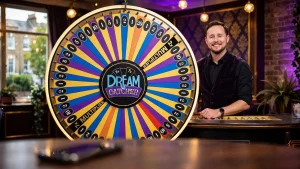
Live dealer roulette streams a physical wheel while the casino interface records bets, a distinction that separates it from RNG roulette.

Live dealer roulette combines a physical game in a studio with a digital betting interface. The wheel is spun by a human dealer, while the table and its activity are streamed in real time to the player’s screen. Bets are placed through the casino interface rather than by handling chips at the table. The result comes from the physical wheel shown in the stream, not from a computer-generated roulette draw.
That distinction is the defining feature of the live format. In computerised roulette, a Random Number Generator, or RNG, determines the result. The screen may show a wheel or another animation, but the outcome is generated by software. In live dealer roulette, the streamed studio game supplies the visible wheel and dealer, and the interface is the means of joining the betting.
The screen therefore has two roles. It carries the live game and provides the controls for placing bets. Those elements are connected, but they are not the same thing: the interface records the player’s selection, while the dealer spins the physical wheel. A polished display does not turn an RNG game into a live one, just as a stream of a real wheel does not mean bets are placed directly in the studio.
This is useful when comparing roulette games presented in an online casino. A title or graphic alone does not explain how its result is produced. The relevant distinction is whether play is streamed from a studio with a human dealer and physical wheel, or whether the outcome is generated by an RNG. Both formats are digital from the player’s perspective, but the underlying process differs.
A live session is not a recording dressed up as a table. The gameplay is transmitted in real time, so the dealer’s actions and the wheel’s movement are part of the current game. The on-screen interface links the player’s bet to that game. In broad terms, the experience pairs a streamed table with a digital means of participating; it does not require the player to be physically present where the wheel is located.
That arrangement also explains why the word “live” refers to the game’s presentation and operation, not to a different way of placing a bet. The player still uses a screen to make selections. The difference is that the game itself is being conducted by a dealer with a physical wheel, rather than being simulated by an RNG. A live table can therefore resemble an online interface while retaining a real studio game behind it.
For someone considering Lightning Roulette online, the first question is whether the version being viewed is the live dealer game or a computerised roulette product. The phrase “online casino with Lightning Roulette” does not by itself establish how a particular table works. The live format means a studio stream, a human dealer and a physical wheel; the RNG format means the result is generated electronically. The game’s presentation should be read in that context, without assuming that every roulette screen operates in the same way.
In the UK, live dealer casinos are legal when they hold a UK Gambling Commission licence. Remote gambling operators offering games to the British market must hold the relevant Commission licence. That legal framework applies to the operator; it does not alter the distinction between a streamed wheel and a computer-generated result. The two questions are separate: how the game produces its outcome, and whether the operator is authorised to offer it in the market.
The live format can make the game feel closer to a casino table because a human dealer is conducting play in a real studio. Yet the player’s participation remains mediated by the interface. Bets are entered on screen, and the physical game is watched through the stream. It is neither a conventional in-person table nor merely an animation of one; it is a live game delivered remotely through video and software.
This basic model is enough to identify what “live dealer roulette” means without assigning extra features to a particular game. The wheel is physical, the dealer is human, the play is streamed as it happens, and bets are placed through the screen. Computerised roulette differs at the point that matters most to this comparison: its result is produced by an RNG rather than by a ball landing on a physical wheel.
Choosing a live casino Lightning Roulette table involves more than the game itself: it is also worth checking what is known about withdrawals. This list provides a concise reference for considering the operators on that basis.
Britsino
Britsino lists a payout speed of 1–3 business days, a useful detail to consider when choosing where to play.
Zombillion
Zombillion lists a payout speed of 1–3 business days, giving players a stated timeframe for payouts.
SlotoSport
SlotoSport lists a payout speed of 1–3 business days, which may help set expectations around withdrawals.
Chanze
Chanze lists a payout speed of 1–3 business days, providing one practical point to consider.
Dieselwin
Dieselwin lists a payout speed of 1–3 business days, a helpful detail for players weighing payout timing.
NightLuck
NightLuck lists a payout speed of 1–3 business days, offering a stated timeframe for payouts.
WinBeast
WinBeast lists a payout speed of 1–3 business days, giving players a practical point of reference.
x3bet
x3bet lists a payout speed of 1–3 business days, which can help with expectations around withdrawals.
Amunbet
Amunbet lists a payout speed of 1–3 business days, providing a clear payout-timing detail to consider.
EvoSpin
EvoSpin lists a payout speed of 1–3 business days, a practical detail for players considering the operator.
Lightning Roulette sits within the live casino roulette category: the central question remains the roulette outcome, regardless of the game’s title or presentation. The ball comes to rest against a numbered pocket. A bet on that same number wins; a bet on a different number does not win on that result. That is the basic event on which any discussion of a roulette table must rest.
The word “Lightning” should not be treated as a complete description of the rules. A game name can signal a particular branded version, but it does not, by itself, establish how any special feature works, which bets qualify for it, or how a winning amount is calculated. Those details belong to the table’s rules and paytable. Without them, claims about boosted returns, particular numbers receiving special treatment, or a changed payout structure would be guesswork dressed as a specification.
That distinction matters because the ordinary roulette result and any additional game feature are separate questions. First, a ball settles on a number. Then the table’s rules determine whether the wager placed matches that result and what the corresponding return is. If a branded feature is attached to the game, its terms may add another layer, but the title alone cannot settle what that layer contains. A sensible description therefore starts with the outcome and leaves claims about special mechanics to the rules actually displayed for the table.
A live casino setting changes how the game is presented, not the meaning of a roulette result. The game is shown as live play rather than as a computer-generated sequence, while bets are made through the screen interface. In that setting, the table combines an observable game with an electronic method of placing wagers. The streamed presentation may make the experience feel closer to a casino table, but it does not turn the name into a guarantee about returns or make a bet more likely to succeed.
For anyone comparing a Lightning-branded table with another roulette game, the useful starting point is not the promotional label. It is the exact rule set attached to the table. The details that affect a decision are the accepted wagers, the conditions for any special feature, and the stated payout for a winning bet. Those terms should be read as parts of one calculation. A feature can sound valuable while applying only under particular conditions; a headline cannot show whether those conditions fit the wager being considered.
The same separation prevents confusion between the game’s visual identity and its underlying risk. A lively presentation may make each result feel distinctive, but the result still resolves around where the ball finishes and whether the selected number corresponds to that pocket. A dramatic name does not alter that test. Nor does a run of recent outcomes establish what the next ball will do. Each spin is a new result, not a correction to earlier ones.
“Lightning Roulette casino” can refer loosely to the branded game, a live table carrying that title, or a casino site that offers it. Those are not interchangeable descriptions. A site’s game catalogue may show that a title is available, while the individual table page supplies the rules that govern play. Availability alone says nothing about whether a particular bet qualifies for a feature or what its return would be. The commercial label and the contractual terms perform different jobs; only the latter can answer the calculation.
For a UK audience, the live-casino context also sits within the country’s regulated online gambling framework. Real-money online casino play is legal at sites holding the required UK Gambling Commission licence. That does not endorse any particular roulette title, certify a particular outcome, or replace the table rules. It identifies the regulatory context in which a legal operator serving British customers must provide the game.
The practical reading of Lightning Roulette is therefore restrained. It is a live roulette game with a branded identity; its core outcome is a number, and a winning number bet must correspond to the number where the ball stops. Beyond that, the details depend on the game’s displayed rules, including any feature-specific conditions. Treating the title as evidence of a certain return would confuse packaging with terms—a distinction that costs nothing to observe and can matter to the amount at stake.
This is entertainment, not gambling advice. A roulette result is uncertain, and no presentation or label changes that basic fact.
A useful comparison of live roulette tables starts with the wheel, not a casino’s claim to offer the “best” game. The variant determines how many pockets are in play and therefore changes the chance of a selected number appearing. A table with an attractive name or presentation does not alter that basic calculation.
European Roulette has one green pocket, marked 0. American Roulette has two: 0 and 00. That extra pocket changes the odds for a number selection. The chance of winning on a chosen number is 1 in 37 on a European wheel and 1 in 38 on an American wheel. The difference is small in appearance and concrete in the arithmetic: the American layout has one additional outcome that is not a numbered selection.
This makes the variant a practical first filter when comparing tables in a UK live casino. The table information should identify whether the game is European or American. If the wheel type is not clear, a general label such as “roulette” is not enough to compare the odds. The same applies to claims about a table being popular, premium or among the best: none of those descriptions tells a player how many pockets the wheel has.
Features one green pocket (0), offering a 1 in 37 chance of winning on a chosen number.
Features two green pockets (0 and 00), offering a 1 in 38 chance of winning on a chosen number.
For Lightning Roulette, the name alone should not be treated as a substitute for checking the underlying roulette variant. The relevant comparison is still the wheel and the stated rules of the particular table. Where the table information identifies a European or American wheel, the number of green pockets gives a direct basis for comparing the chance of a selected number. Where that information is absent, there is no sound basis for assuming that two tables have the same odds.
A comparison can therefore be kept to a short set of checks:
This is a more useful standard for judging what might count as the best Lightning Roulette casino in the UK than a ranking without a stated basis. “Best” has no fixed numerical meaning unless the criterion is specified. If the priority is the chance of a chosen number landing, the European wheel has the more favourable of the two stated odds. That does not make a particular operator or table the best overall; it identifies a measurable difference between wheel types.
The distinction also prevents a common comparison error: treating the visual design, branding or live presentation as if it changed the probability attached to the wheel. A roulette table can look different while the relevant question remains unchanged: how many pockets are there, and which variant is being played? For a comparison based on odds, those details carry more weight than adjectives.
A table comparison should stop short of implying that a more favourable chance makes a result predictable. The odds describe the chance associated with the wheel variant, not a promise about any individual spin. For assessing tables, the useful conclusion is narrower: identify the layout first, then compare the stated odds on that basis.
“First-person” can describe the way a game is presented, but it should not be treated as proof that a particular camera mode is available. A live dealer roulette game streams play from a studio, where a human dealer conducts the game in real time. Bets are entered through an on-screen interface. Those elements define the live format; they do not, by themselves, establish that a player can choose a dedicated viewpoint for Lightning Roulette.
The distinction matters when looking for a first-person version of Lightning Roulette in a UK casino. A live stream may show a dealer and the game in progress, while the betting interface remains a separate part of the screen. That is not the same thing as a selectable camera perspective, and the phrase “first-person” may be used loosely to describe an immersive presentation rather than a documented feature. The practical question is therefore not only whether the game is live, but what the game’s own display and rules identify as available.
In a live session, the stream presents studio gameplay as it happens. The dealer is a person on camera, rather than an animated figure standing in for one. The player watches that feed and uses the screen interface to make bets. The image and the controls serve different purposes: the stream shows the live game, while the interface records the player’s choices. Calling the experience first-person does not change that arrangement.
Nor does “first-person” necessarily mean that the player sees the table from the dealer’s eyes or from a seat at the table. Without a stated camera option, that interpretation is too specific. A close view of the action may feel more immediate than a conventional computer-generated game, but a feeling of proximity is not evidence of a selectable viewpoint. Presentation language should not be used as a substitute for the game’s actual description.
A live stream shows a human dealer and the game in real time via a studio feed, while a dedicated first-person mode would specifically allow the player to select a particular camera perspective.
For anyone comparing a first-person Lightning Roulette casino game with a standard live presentation, the useful checks are concrete. The game page should identify whether it is a live dealer title, explain how bets are placed, and state whether different views can be selected. If it only describes a live stream, that supports the presence of real-time studio play; it does not confirm a dedicated first-person mode. The label alone cannot settle the question.
This also helps separate live dealer roulette from a game that merely uses realistic graphics. In the live format, a human dealer conducts the game in a studio and the stream carries that play to the screen. The betting interface lets the player participate remotely. The player is not physically at the studio table, and the stream does not turn the on-screen controls into a camera setting.
The clearest description of playing first-person Lightning Roulette, then, depends on the specific game presentation rather than on the search phrase attached to it. A live dealer stream establishes a real person conducting studio play; it does not automatically establish a first-person camera. Where a separate viewpoint is offered, its controls and description should make that explicit. Where they do not, “first-person” is best read as a broad description of the viewing experience, not as a confirmed technical feature.
A headline bonus value is not the amount available for play at a live roulette table. The relevant figure is the share of qualifying stakes that counts towards the offer’s wagering requirement, together with any exclusions that apply to live games. If live roulette receives reduced weighting, a larger balance may have to be wagered elsewhere before the bonus conditions are met. The headline and the usable value are separate calculations.
A specialist review of UK casino offers reports that welcome promotions are commonly built around free spins on slots, rather than funds for live tables. It also notes that these spins are not available for use at live tables. That description is a market snapshot, not a promise about every current promotion: the offer’s own terms determine which games qualify. A promotion aimed at slot play may therefore add nothing to a session centred on Lightning Roulette.
Before opting in, the useful checks are the wagering requirement, the game weighting and any maximum bet limit attached to the offer. These conditions affect the route from bonus credit to withdrawable funds. A live game with low weighting can make that route longer, even where the offer’s opening figure looks substantial. If the terms exclude live casino games, the bonus cannot be treated as extra roulette funds at all.
Weighting is often expressed as a percentage of a qualifying stake. A 10% contribution, for instance, means that only a small part of the stake is counted towards the requirement. It does not mean that the player receives a 10% return, nor does it reduce the amount staked at the table. The distinction is simple but financially material: bonus progress is not a payout.
The terms should also be checked for what happens when a promotion is accepted. Some offers place restrictions on eligible games or on the stakes permitted while bonus funds remain active. Where a condition is unclear, the offer cannot be valued reliably. A large advertised amount with broad exclusions may have less practical value than a smaller offer whose rules fit the intended game.
For a player interested only in live roulette, a slot-focused welcome promotion may be irrelevant rather than generous. Accepting it can add conditions to an account without improving the funds available for that table. The sensible comparison is between the offer’s usable benefit and the restrictions it introduces, not between its headline figure and another casino’s headline figure.
Any offer should be assessed using the operator’s current terms, not a summary or promotional banner alone. If live games count only partly, the effective contribution should be understood before opting in; if they are excluded, the offer’s value for roulette is nil. Entertainment content is not gambling advice, and a promotion does not alter the underlying financial risk of play.
A roulette wager has two parts to its cost: the chance of winning and the amount returned if it wins. The house edge expresses the casino’s mathematical advantage under the stated rules. It is not a prediction of what will happen in a particular session, and a short run of results does not change it.
The stated house edge for a straight-up bet is 2.9%. For other bet types, it is 2.7%. The difference is small, but it is still part of the calculation: a bet on one number carries a slightly higher theoretical cost than the other roulette wagers covered by that comparison. A larger possible return on a winning straight-up bet does not remove that cost; the chance of landing on the chosen number is part of the same calculation.
That distinction matters when assessing a Lightning Roulette casino game. Its name does not alter the basic question behind a roulette wager: what outcome must occur, and what does the applicable table rule return? Any additional game feature should be considered separately from the underlying bet and its stated house edge. A headline multiplier, where offered, would not by itself establish the overall value of a wager.
French Roulette changes how zero affects an even-money bet. If the ball lands on zero, the player loses only half of that stake rather than the whole amount. This rule reduces the effect of zero on those wagers; it does not mean that zero is a winning result for an even-money selection. The distinction is about the amount lost on that outcome, not a change to what the player selected.
For someone considering whether to play a Lightning Roulette casino game in the UK, the relevant comparison is therefore not just the visible potential return. The bet type, the treatment of zero and any special conditions shown for that game all affect how a result is settled. A familiar roulette label is not enough to establish that every table follows the same rules.
The figures describe a mathematical edge, not a guaranteed loss on each spin or a reliable forecast of session results. Outcomes remain uncertain from spin to spin. Roulette play is for entertainment, not gambling advice.
A Lightning Roulette demo, where available, should be treated as a way to familiarise oneself with a game interface, not as a source of income. A play-through without a real-money stake does not create a claim to cash prizes. Any balance or result shown in a free-play mode is not a real payout.
Availability and the exact features of a demo cannot be assumed from the game’s name. A listing or promotional description should make clear whether it offers free play, real-money play, or both. If that distinction is unclear, the safest accounting treatment is to assign no cash value to anything displayed during the session. A simulated win remains simulated, however convincing the screen presentation.
Free play can show how a player interacts with the on-screen controls, but it does not establish the financial result of real-money play. The two involve different consequences: a demo result has no financial value, while a real-money stake can be lost. Familiarity with a layout or sequence of actions does not change the underlying odds, nor does a run of favourable demo results make a future real-money result more likely.
A trial is also not a test of whether a game can produce dependable returns. Random outcomes do not become predictable because they appear in a sequence, and a demo record cannot be used to forecast later spins or Lightning Numbers. Tracking simulated results may make a session easier to review, but it does not turn that record into a betting advantage.
Before selecting a free-play option, the terms should identify what mode is being opened and whether any real-money account activity is involved. No deposit, bonus balance or displayed credit should be treated as withdrawable unless the applicable terms explicitly establish that status. If real-money play follows, its separate rules and paytable need to be reviewed; a demo does not replace that check.
The useful measure of a trial is therefore limited: whether the controls and presentation are understandable. It cannot verify a payout, guarantee a return, or establish that a real-money session will reproduce the same results. A screen balance without withdrawable value is simply not money.
This material is for entertainment purposes only and is not gambling advice.
A live dealer roulette table runs to the dealer’s pace, not the instant response of a computer-generated game. The wheel is operated in real time, so the sequence of play takes longer than a digital version. That affects how quickly bets can be placed and how many rounds fit into a session. A slower rhythm is a table condition, not a way to improve the chance of a particular result.
Minimum stakes also matter before a session begins. Live games may require higher minimum bets than digital versions, so the same planned budget can cover fewer rounds. The relevant figure is the minimum shown for the specific table at the time of play; it should not be inferred from a general description of live roulette. For anyone comparing a Lightning Roulette live dealer casino option with a digital game, the practical comparison is therefore not only the format but also the entry stake and pace.
A stable internet connection is necessary throughout play. If the stream or betting interface becomes unreliable, the timing of a bet can become difficult to manage. Connection quality is part of the table’s operating conditions, rather than a minor technical preference. A session that repeatedly interrupts the view or interface is not equivalent to uninterrupted play.
The dealer-led format can make the game feel closer to a casino table, but it does not remove the financial limits of the game. A UK live dealer casino offering Lightning Roulette still presents a real-money gambling activity when played for stakes. The format does not make outcomes predictable, and the slower pace should not be treated as a reason to extend a session.
This material is for entertainment purposes only and is not gambling advice.
Playing Lightning Roulette online in the UK involves more than choosing a table and placing a stake. The session needs a financial boundary set before play begins, because each spin creates another opportunity to add money or try to recover a loss. A budget is useful only if it is treated as a stop point, not as a target to spend in full.
The same limit applies when a session is going well. Winnings do not change the original plan: extending play to pursue a larger result exposes more of the balance to risk. Losses do not justify raising stakes or depositing more to recover them. Once the set budget or time boundary is reached, play ends.
Payment choice is also constrained in Britain. Credit cards must not be used for gambling, including where a credit-card payment is routed through a money service business. A digital wallet is not a workaround if it allows credit-card funds to be used for gambling; operators cannot accept those wallet payments either. Payment routes should therefore be checked for their funding source, not judged only by the name of the service.
Deposits and play should remain separate decisions. A successful payment does not make further play affordable, and an available balance is not a reason to increase the session budget. Keeping the limit fixed makes the cost of the session measurable; changing it after a loss or win makes the original boundary meaningless.
Online gambling in the UK is legal for adults aged 18 and over at sites holding a UK Gambling Commission licence. That legal status does not alter the financial risk of a session. The content is for entertainment purposes only and is not gambling advice.
Before placing a bet in an online Lightning Roulette game, check the table’s rules and paytable. The screen should make clear which wagers are available and what each pays if it wins. A familiar game name is not a substitute for checking the terms of the specific table; the relevant decision is whether the stated rules match the bet being considered.
The paytable describes the return attached to a winning wager, not the likelihood that the wager will win. Those are separate parts of the calculation. A larger displayed payout does not, by itself, make a bet more likely to land, and the table information should not be read as a forecast.
Past results do not predict the next spin. A run of red or black, repeated numbers, or a result that has not appeared recently does not change the next outcome. Roulette statistics and tracking tools can record what has happened, but they cannot turn that record into a reliable prediction of future spins or Lightning Numbers. Treating a tracker as a signal adds confidence, not information about the next result.
A final check is therefore simple: confirm the rules, identify the payout for the intended wager, and place nothing that is unclear. If the table display does not explain a bet plainly, there is no need to infer its terms from previous rounds or from another table.
This material is for entertainment purposes only and is not gambling advice.
Live roulette includes European, American and French variants. European Roulette has one green pocket, American Roulette has 0 and 00, and in French Roulette an even-money bet loses only half when the ball lands on zero.
Place your bets using the on-screen interface, then watch the dealer spin a physical wheel in a live studio stream. Your roulette bet wins when it matches the number where the ball lands.
A roulette bet wins when it matches the result determined by the ball landing on the wheel. The house edge varies by bet: it is 2.9% for straight-up bets and 2.7% for other bets.
Choose a UK casino operator that holds a UK Gambling Commission licence. Check the table’s minimum bet and the casino’s bonus terms, and make sure your internet connection is stable.
European Roulette has one green pocket, 0, while American Roulette has two, 0 and 00. The stated odds of winning are 1 in 37 for European Roulette and 1 in 38 for American Roulette.