A clear guide to online fruit-slot mechanics, game versions, practice rounds and the details shown in a paytable.
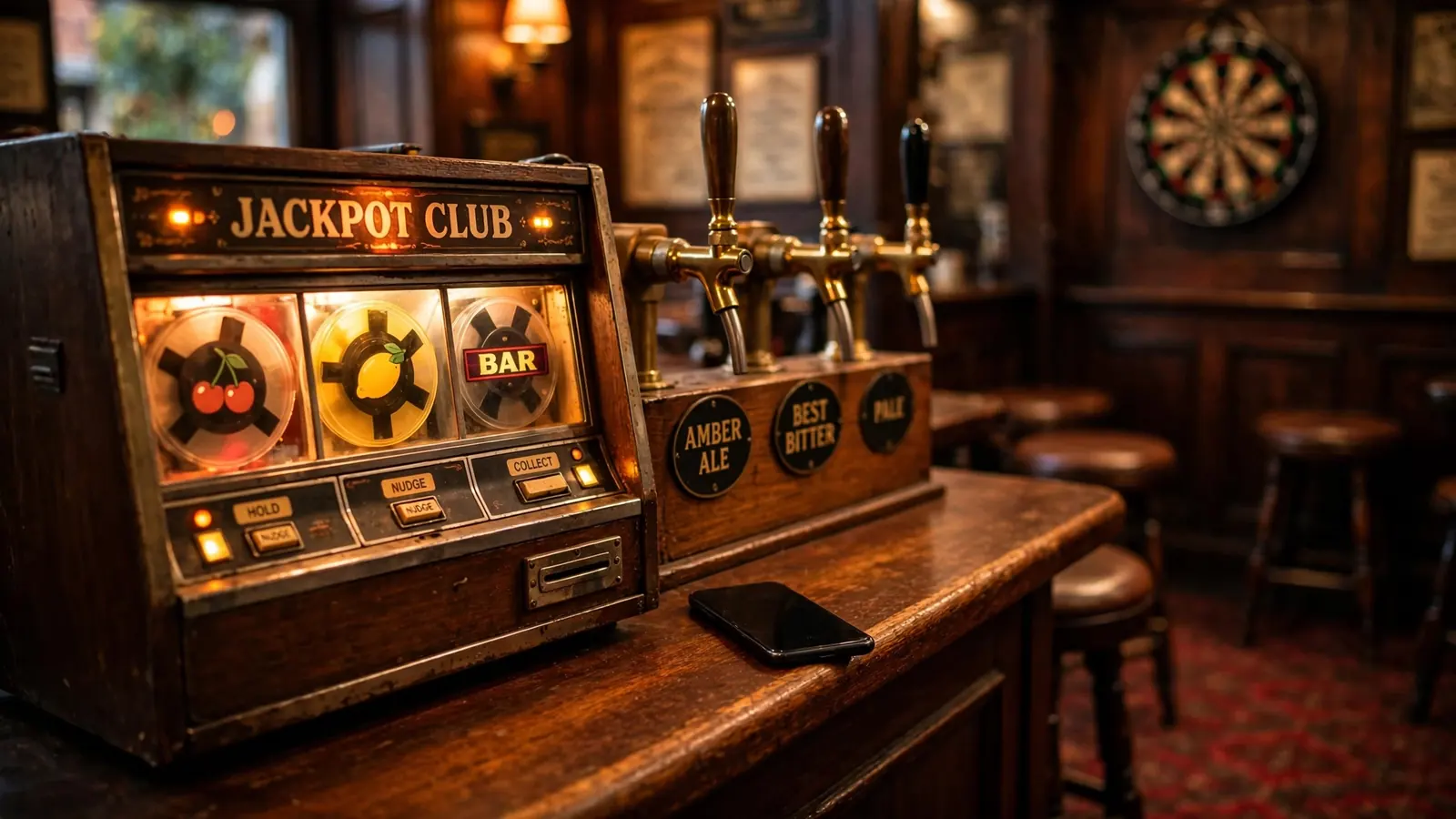
Online fruit-machine-style games inherit their visual language from the physical machines found in pubs, arcades and betting shops. Familiar symbols, reels and the prospect of a winning line carried over when play moved to screens. The resemblance is deliberate, but an online game is not a physical cabinet reproduced without change: its results are generated through digital systems.
That change affects how the game operates, even when its presentation looks traditional. An online fruit machine uses a random number generator (RNG) to determine outcomes. Each result is independent; the symbols shown on one spin do not make a particular result more or less due on the next. The cabinet’s physical movement has become an on-screen animation, while the underlying process is digital.
The transition did not remove the fruit machine’s cultural associations. A pub fruity was part of a familiar setting, and its compact visual cues remain recognisable on a phone or computer. Online versions can preserve that appearance while adding functions that a physical machine could not provide in the same way. The important distinction is between presentation and operation: a game may look like a classic machine while relying on software to produce its results.
When choosing fruit machine slots in the UK, it helps to consider how quickly winnings may be paid out as well as the games themselves. This list notes the payout information available for each operator.
Britsino
Britsino lists a payout speed of 1–3 business days, a useful detail to consider when choosing where to play.
Zombillion
Zombillion lists a payout speed of 1–3 business days. This gives players a stated timeframe for payouts.
SlotoSport
SlotoSport lists payouts as taking 1–3 business days, providing a clear timeframe to factor into your choice.
Chanze
Chanze gives a payout speed of 1–3 business days, which may be useful when considering a fruit machine slots operator.
Dieselwin
Dieselwin lists a payout speed of 1–3 business days. That is the available payout detail for this operator.
NightLuck
NightLuck states a payout speed of 1–3 business days, giving readers a timeframe to keep in mind.
WinBeast
WinBeast lists payouts as taking 1–3 business days, a practical detail for players weighing their options.
x3bet
x3bet gives a payout speed of 1–3 business days. This stated timeframe is the available point of note.
Amunbet
Amunbet lists a payout speed of 1–3 business days, offering a clear timeframe for players to consider.
EvoSpin
EvoSpin states that payouts take 1–3 business days, providing a useful practical detail for this list.
Rainbow Riches offers one documented example of that shift. Barcrest first released it on cabinets in UK pubs, arcades and betting shops in 2006; it moved online around 2009. The dates show how a recognisable cabinet title could cross into online play, rather than implying that every digital fruit slot followed an identical route. The physical and online versions belong to the same broad tradition, but their operating environments are different.
That distinction matters when the term “fruit machine” is used for online games. It can describe a style shaped by physical machines, not a promise that the digital version behaves like a cabinet in every respect. Online fruit slots retain the visual shorthand of reels and familiar symbols, while software determines how each game runs. The result is a family of games that connects an older form of entertainment with a newer delivery method.
The connection is therefore historical and visual, not mechanical in every detail. Physical fruit machines established the format’s familiar identity; online versions carry that identity into a setting where outcomes are generated independently by an RNG. Understanding that starting point helps separate the tradition the games evoke from the technology that now produces each result.
The reel layout determines where symbols can land; the win system determines which combinations count. Most modern online fruit machines use a five-reel, three-row grid. That gives a familiar rectangular display, but the visible symbols do not tell the whole story. A game may assess set paylines, count matching positions across adjacent reels, or use a changing reel structure. The paytable and game rules explain which system applies.
 UK casino sites for slots: rules and costsLearn how UKGC licensing, slot returns, bonus turnover and withdrawal rules affect UK casino play, including why offshore sites without a UKGC…
 Progressive Slots Online in the UK: How They WorkLearn how progressive jackpots are funded, when they pay and what RTP leaves out. Contributions are typically 1% to 3% of each…
A fixed-payline game has predefined routes across the grid. A route may run straight across a row or move through other positions, such as stepping between rows as it crosses the reels. The game checks symbol combinations against these routes, and a line counts only when its symbols meet the conditions shown in the rules.
Modern fruit machines commonly offer between 10 and 50 fixed paylines. The exact pattern matters: two games with the same grid and the same number of lines may use different routes, so the number alone does not describe every possible winning combination. The paytable shows the available lines and the symbol combinations that can pay on them.
“Fixed” refers to the routes, not to the symbols or results. The lines remain in place from spin to spin, while the symbols landing on the reels change. This gives the game a consistent structure: the grid is read against the same set of paths each time. It also means that a symbol combination visible on the screen is not automatically a win; its positions must fit a qualifying route under that game’s rules.
Some fruit slots replace numbered paylines with a 243-ways system. Rather than requiring a match along one of a set of drawn paths, this format counts eligible symbol arrangements across the reels. In the common five-reel layout, the name reflects the number of possible position combinations when each reel shows three symbols.
That distinction changes how the grid is read. With fixed paylines, the route across the reels is central. With 243 ways, the relevant question is whether matching symbols appear in qualifying positions across consecutive reels, according to the game’s rules. A result may therefore count without tracing one visible line from left to right. The specific paytable still governs which symbols qualify and how the game evaluates them; the label does not replace those details.
The two systems should not be treated as interchangeable measures of generosity. A larger count of possible ways describes the structure used to assess combinations, not how often a win occurs or how much it pays. Those outcomes depend on the game’s design and paytable. Comparing only a line count with a ways count is like comparing two different counting systems without checking what each one counts.
Megaways uses a changing reel structure rather than keeping the same number of symbol positions on each reel for every spin. The symbol count can vary from reel to reel and change on each spin. Because the number of available positions changes, the number of possible ways to form combinations changes too.
Megaways games can produce as many as 117,649 ways to win. That figure describes the maximum created by the dynamic arrangement, not a constant number of routes displayed on every spin. A particular result may have fewer available ways because the reels show a different number of symbols. The exact arrangement is part of the game’s rules, so the paytable or help screen is the place to establish how combinations are counted.
 Penny Slots in the UK: Spins, Stakes and RTPLearn how UK penny slots are defined by total spin cost, how paylines affect stakes, and why a “1p” label can be…
 UK Jackpot Slots: Rules, Licensing and Real-Money PlayUnderstand UK jackpot slot rules, operator licensing, RTP and bonus terms. The UK Gambling Commission is the sole regulator for commercial gambling…
This is a different structure from both fixed paylines and a standard 243-ways grid. Fixed paylines keep their paths; 243 ways counts combinations on a set layout; Megaways changes the number of symbol positions and therefore the available combinations. A large maximum can make the format sound more expansive, but it does not by itself establish the chance or value of a win. It describes the number of combinations the reel arrangement can create.
For an online fruit slot, the useful comparison starts with the grid and then asks how the game evaluates it. Check whether the routes stay fixed, whether combinations are counted as ways, or whether reel heights change. Those details explain why two games that look similar can behave differently when symbols land. They also prevent the common mistake of reading a busy screen as evidence that every visible cluster forms a winning combination. The rules, rather than the appearance of the reels, define a qualifying result.
Access to real-money fruit slots in the UK is governed by the operator’s licence, the player’s age and identity, and a maximum stake per spin. These are market-wide conditions: the game’s theme or reel layout does not create an exemption.
A casino offering online gambling to customers in Great Britain must hold the relevant operating licence from the UK Gambling Commission. The requirement applies to operators selling into the market even when the business is based elsewhere. A site’s presentation as a UK casino, its range of fruit machine games or a supplier’s reputation does not replace the operator’s own licence.
A supplier licence is not proof that every version of a game is available at every casino, either. Those are separate questions: the operator’s licence concerns permission to serve the market, while a particular game’s availability concerns the catalogue offered by that operator.
Offshore sites without a UK Gambling Commission licence sit outside the UK regulatory system. Their availability online does not make them licensed to serve British players. A player using such a site loses the protections attached to the UK system, including access to UK dispute resolution and self-exclusion arrangements such as GAMSTOP. There may also be no effective route to resolve withheld payouts, and unlicensed games may be manipulated. The practical distinction is not cosmetic: a familiar fruit-slot title on an unlicensed site does not carry the same regulatory safeguards.
For fruit slots casinos serving UK customers, licence status is therefore a threshold condition, not a quality score. It does not show that every game is fair in every respect, nor does it establish which title offers preferable terms. It establishes whether the operator is authorised to provide the service in the market.
Real-money play is restricted to people aged 18 or over. Registration also requires verified identity; entering a date of birth is not, by itself, the full verification process. The operator must establish who holds the account before allowing real-money fruit slots to be played.
These checks are part of access control rather than a feature of a particular game. A classic fruit machine title and a modern fruit-themed slot are subject to the same age and identity requirement when played for money at a UK-licensed casino. Switching titles does not alter eligibility.
 Eyecon slots at UK casinos: what can be verifiedSeparate verified facts from assumptions on Eyecon casino availability, UK licensing, slot limits, mobile access and bonus wagering.
 Microgaming Slots at UK Casinos: What to CheckLearn why a Microgaming label does not confirm a slot’s mechanics, and what game details and casino terms need checking before comparing…
Verification can affect when an account is ready for real-money play, so the registration process should not be treated as a formality completed after wagering begins. The requirement belongs to the operator’s compliance obligations, not to the game provider. A game appearing in a lobby is not evidence that an unverified account is entitled to stake money on it.
UK Gambling Commission rules set an online slots stake ceiling according to age. For customers aged 25 and over, the maximum is £5 per spin. For those aged 18 to 24, it is £2 per spin. These limits apply to online slots, including fruit machine-style games; a title cannot be treated as an exception because it resembles a pub fruity or uses a different reel arrangement.
The cap is a maximum, not a target stake or a recommended amount. A lower stake remains possible where the game and account settings allow it. The limits concern each spin, so they are distinct from account-level choices about how much to deposit or how long to play. Those broader money-management controls are separate from the access rules.
Current regulatory guidance describes the cap as an operator obligation enforced at account level. A casino must prevent a player from exceeding the applicable limit; it is not enough to display a warning and leave the excess stake available. The relevant ceiling follows the customer’s age category, and the operator’s controls must apply across its online slots rather than only to selected fruit titles.
For anyone comparing UK casinos with fruit slots, the regulatory checks answer a narrow but important set of questions: whether the operator holds a UK Gambling Commission licence, whether the account holder is at least 18 and has verified identity, and whether the stake permitted on each spin stays within the age-based cap.
Those conditions do not rank casinos or identify the best fruit slots. A licence does not guarantee a particular game catalogue, and compliance with stake limits does not say anything about a game’s payout profile. It does establish the legal and account-level framework within which real-money play may take place. A site that cannot meet that framework is not an equivalent alternative simply because its fruit machine games look familiar.
RTP is a useful comparison point, but it is not a complete measure of a fruit slot’s quality. The percentage represents the game’s stated theoretical return across play, rather than a forecast for an individual session. A higher figure can therefore help distinguish two versions on paper, but it cannot promise a particular result or make a game a reliable source of income.
For UK fruit-machine-style games, the typical published RTP range is 94% to 97%, although some titles sit outside it. That range is a reference, not a pass mark: a game should be assessed using the figure published for the specific version available, rather than an average or a number attached to the title elsewhere. A title’s name may remain the same while its stated RTP differs between versions.
Specialist reviews report that published RTPs can vary between versions of the same game. The practical check is the paytable or game information for the version at the casino being considered. A figure shown in an older review, on a general game listing or for another operator may describe a different build. It should not be treated as confirmation of the live version’s terms.
A comparison is most useful when it follows a consistent order:
This avoids a common category error: comparing one operator’s live game with a different version described elsewhere, then treating the difference as a reliable ranking. If the current game information does not display an RTP, a figure from another source does not fill that gap automatically.
The percentage also needs to be read in context. RTP describes the theoretical return stated for the game; it does not show what a particular player will receive, how quickly a result will occur, or whether a session will end ahead. It is not a guarantee that a stated proportion of an individual’s stake will come back. A short run can produce a result far from the published figure, so a single session is not a sound test of whether the displayed RTP is accurate.
That distinction matters when assessing claims about the best fruit slots in the UK. A list based only on a title’s name or a figure copied from a general review may mix different versions and present an unreliable order. A more defensible comparison records the exact version and its displayed RTP, then avoids turning that number into a promise about outcomes. Without matching version information, an apparent difference may not be a meaningful comparison at all.
Comparing RTP Versions
Identify the build
Find the exact game title and version provided by the casino.
Locate the RTP
Check the published return to player percentage within that specific version's paytable or game information.
Perform the comparison
Compare this figure with the published RTP of other identifiable versions or titles.
Limit the scope
Ensure the comparison remains strictly between like-for-like published information.
The same method applies when comparing fruit-machine games available at different UK casino sites. The site label alone does not establish which version is running. The deciding detail is the game information attached to the particular build offered there. If a review gives one figure while the live paytable shows another, the live version’s displayed terms are the relevant basis for evaluating that game at that casino.
RTP is therefore a narrow measure, not a complete verdict. It can support a comparison between clearly identified versions, but it cannot establish that a title is more enjoyable, easier to understand or more likely to produce a win. Nor does a high published return remove the uncertainty of play. Treating the percentage as one item of game information, rather than as a prediction, keeps the comparison accurate.
Promotional terms are a separate calculation. A fruit slot’s RTP does not establish whether that game qualifies for a bonus or how its play counts towards any requirement. Those conditions need to be checked in the live offer terms; a game’s published return cannot substitute for them. Keeping the two assessments separate prevents a favourable RTP figure from being mistaken for favourable bonus conditions.
A sound shortlist of fruit slots is not a ranking based on the largest number found online. It is a comparison of identifiable game versions using the figures displayed for those versions, with uncertainty kept in view. Where the version or its published RTP cannot be confirmed, the comparison remains incomplete rather than becoming more certain through repetition.
Real-money play turns each spin into a cash transaction: the stake leaves the balance immediately, while any return depends on the game’s outcome. Fruit machine slots for real money are therefore best assessed as entertainment with a cost, not as a source of income. A winning session does not establish that the next one will be profitable, and a previous loss is not a reason to increase the next stake.
A workable budget starts with money that can be spent without affecting bills, savings commitments or other essentials. That amount is the session’s maximum loss, not a target to use up. Once it is reached, play stops; deposits made to recover losses simply increase the possible cost. Any winnings are variable rather than income, so they should not be built into a household budget or treated as money owed by the game.
Account controls can put practical limits around that decision. Many UK-licensed operators provide deposit limits, allowing a maximum to be set for money paid into the account. A limit is most useful when chosen before play and kept separate from any expectation of winning. Changing it during a session because the balance has fallen weakens its purpose. The relevant terms should also make clear how the operator applies a limit and when a requested change takes effect.
Session time reminders and reality checks address duration rather than spending. Many operators offer prompts at hourly or half-hourly intervals. They can show that time has passed and create a point to pause, but they do not set a financial ceiling or stop play automatically. A deposit limit and a time reminder therefore cover different risks: one constrains funding, while the other makes continued play more visible.
A simple session record can keep the numbers honest. It can note the starting balance, deposits, withdrawals and the final balance, alongside the time spent playing. The difference between the amount deposited and the amount withdrawn shows the cash result; the time entry shows what that result cost in attention. A positive balance at the end does not erase the amount deposited, and a negative one does not become less real because it was accumulated in small stakes.
Where gambling no longer feels controlled, self-exclusion is a stronger measure than a reminder. A specialist review describes GAMSTOP as blocking registered players from gambling with participating operators for a selected period of six months, one year or five years. This is not the same as setting a deposit limit: it is intended to prevent access across operators on the scheme for the chosen period. GamCare and the National Gambling Helpline are also UK help services for people affected by gambling.
The financial terms of a real-money session are not only the displayed stake. Deposits, time, losses and any withdrawals together show its actual cost. Set a budget before playing, use account controls as boundaries rather than targets, and stop when the planned limit is reached.
A free round can reveal how a particular fruit machine is presented: its symbols, spin controls, animations and any features shown during play. It allows the game to be explored without staking money, so the results in that session do not represent cash won or lost.
That distinction matters because the reels are not a sequence that can be read for clues. Online fruit-machine-style games use random number generators, and each outcome is independent. A run of matching symbols, near misses or repeated low-value results does not make a different result more likely on the next spin. The practice screen records what has happened in that session; it does not forecast what comes next.
Free play is therefore useful for checking basic usability, not for establishing a reliable pattern. It can show whether the controls are clear and how the game displays a win or feature. It cannot demonstrate that a later session will produce the same sequence, or that a particular symbol is due. A streak in a practice round has no predictive value.
There is also a practical difference between a virtual balance and real stakes. A demo lets the game run without putting the player’s money at risk, but it does not reproduce the financial consequence of a real-money spin. A result that looks substantial on a practice screen is not a withdrawable win. Nor does a losing run in free play establish that a paid session would behave similarly.
The precise version available in free mode may also matter. Game settings can differ between versions, so a demo should not be treated as proof of the terms attached to a real-money version. The displayed game information is the relevant place to check those terms; a sequence of practice outcomes is not a substitute.
For anyone comparing free fruit slots in the UK, the useful question is narrow: does the game’s presentation and operation make sense? Free play can answer that through direct observation. It cannot measure future returns, identify a winning rhythm or reduce the randomness of later spins. The distinction is simple: a practice round is a way to inspect play, not evidence about what a real-money session will deliver.
Fruit machine games span more than one reel format. At one end are compact classic designs; at the other are layouts whose number of winning combinations can change from spin to spin. The artwork may still use familiar fruit symbols, but the reel system determines how symbols are arranged and how a win is assessed.
A classic fruit slot often has three reels and one payline, with few additional features. Its structure is straightforward: symbols must land in the required positions along that line for a prize to be formed. This is a different format from a larger grid with multiple fixed paylines, where several routes across the reels can count.
Rainbow Riches Megaways shows how a fruit-themed title can use a more variable system. Megaways changes the number of symbols displayed on each reel on every spin, so the available winning routes are not fixed. The format can produce as many as 117,649 ways to win. That figure describes the system’s maximum number of ways, not a promise that any spin will produce a win.
The difference matters when comparing fruit slot machine games in the UK. A player moving between a traditional single-line game and a Megaways title is not simply changing the graphics: the reel arrangement and the way winning combinations are counted also change. The familiar fruit-machine label covers both styles, but it does not mean that every game follows the same rules.
Rainbow Riches, Rainbow Riches Pick’n’Mix, Rainbow Riches Freespins, Piles of Cash and Rainbow Reveal are among the named fruit-themed titles. Their names identify individual games, not a shared reel system. The game’s own information is needed to establish its layout and features; a title or theme alone does not show whether it uses one line, fixed paylines or a changing-reel format.
This range also explains why searches for fruit slot games can lead to very different experiences. The defining choice is often the reel structure: a restrained classic layout or a more changeable system such as Megaways. The fruit theme is the common thread, not a guarantee of identical play.
Fruit-themed slot games sit within a wider tradition of fruit machines, but their titles do not always describe their full visual identity. The Rainbow Riches family, for instance, is known by a shared name across several versions: Rainbow Riches, Rainbow Riches Pick’n’Mix, Rainbow Riches Megaways and Rainbow Riches Freespins. Piles of Cash and Rainbow Reveal are other named titles in the broader fruit-themed category. These names identify distinct games, not a ranking or a guarantee that every version is available at every casino.
Rainbow Riches has a documented route from physical cabinets to online play. Barcrest first placed the game on machines in UK pubs, arcades and betting shops in 2006. It moved online around 2009, carrying an established pub-fruit-machine identity into a digital format. That history helps explain why the series is often associated with traditional fruit machines even as its later titles use different formats.
The physical and online versions should not be treated as having identical terms. Physical Rainbow Riches machines are generally configured with a lower payout rate than the online version’s 95% RTP. The comparison describes a difference between the stated configurations; it does not make a particular result predictable or establish that every online edition has the same return. Published terms can vary by version, so a game’s own information remains the relevant reference.
For anyone browsing fruit-themed titles in the UK, the family name is a useful way to trace a game’s lineage, but not a substitute for checking the exact title. A familiar label can cover separate releases, and the cabinet history alone does not establish the terms of an online version.
Traditional fruit machine games often keep the layout compact: three reels, one payline and few extra features. The arrangement is easy to read because the symbols line up across a single route rather than across a larger grid. Modern fruit slots can use more reels, rows and ways to form wins; the classic format keeps the focus on a small set of symbols and whether they land in sequence.
A hold feature lets a player keep selected reels in place while the remaining reels spin again. A nudge shifts a reel by one position after a spin, bringing a different symbol into line. Both features add a decision point to a simple layout, but they do not alter the random process behind the result. Holding or moving a reel changes what is displayed, not the underlying odds of a spin.
Availability is title-specific. Some traditional fruit slots include holds, nudges or both; others have neither. Where a feature appears, its rules may also depend on the game’s conditions, so the on-screen instructions matter more than assumptions based on another title. The number of available holds or nudges can vary as well.
These mechanics are not a guarantee that a near-match can be turned into a win. A nudge may move a symbol into the payline, but it may also leave the line unchanged as a winning combination. A hold preserves selected reels for the next spin; it does not make their symbols more likely to complete a payout.
The distinction is practical: classic reels use a restricted layout and may add holds or nudges, while larger modern grids rely on different structures. Feature names alone do not establish how a particular game behaves; the rules shown for that title determine what each control does.
A fruit slot demo can be used to inspect the game’s displayed information before money is staked. The useful check is not whether a short run of spins appears generous, but whether the paytable identifies the terms for the exact game build available at that casino.
Open the game information or paytable and look for its published return to player (RTP). Specialist reviews note that the same title can be offered in versions with different published RTPs. A figure found in a review, on a provider page or for another casino’s copy may therefore not describe the version in front of the player. The casino’s own game display is the relevant place to check.
The title alone is not enough to identify a version. If the paytable displays an RTP, compare that figure with any other information only when it clearly refers to the same game and version. If the displayed information does not make the version clear, the demo cannot resolve that uncertainty; the figure should not be assumed from a different listing.
The paytable also sets out the game’s symbol values and any features that affect how wins are formed. Those details help establish what the game is designed to pay for, rather than what a particular sequence of spins happened to produce. A demo may show the interface and rules, but it does not provide evidence that a similar result will occur when playing for money.
Online fruit machines use random number generators, so each spin’s outcome is independent. A run of practice results cannot confirm an RTP or predict the next spin. The paytable is a statement of the displayed game terms; the demo is a way to read those terms in context, not a forecast or test of future returns.
A hold keeps selected reels in place while the others spin again; a nudge shifts a reel by one position to try to bring a different symbol into the payline. Their availability and conditions vary by game, and they do not change the random process determining outcomes.
The online version has a 95% RTP. Physical Rainbow Riches machines are generally configured with a lower RTP.
There is no guaranteed way to win: each spin’s outcome is generated independently by an RNG. Check the game’s paytable to understand which combinations qualify for a payout.